
How To Create A Safe Workplace In Politically Polarized World
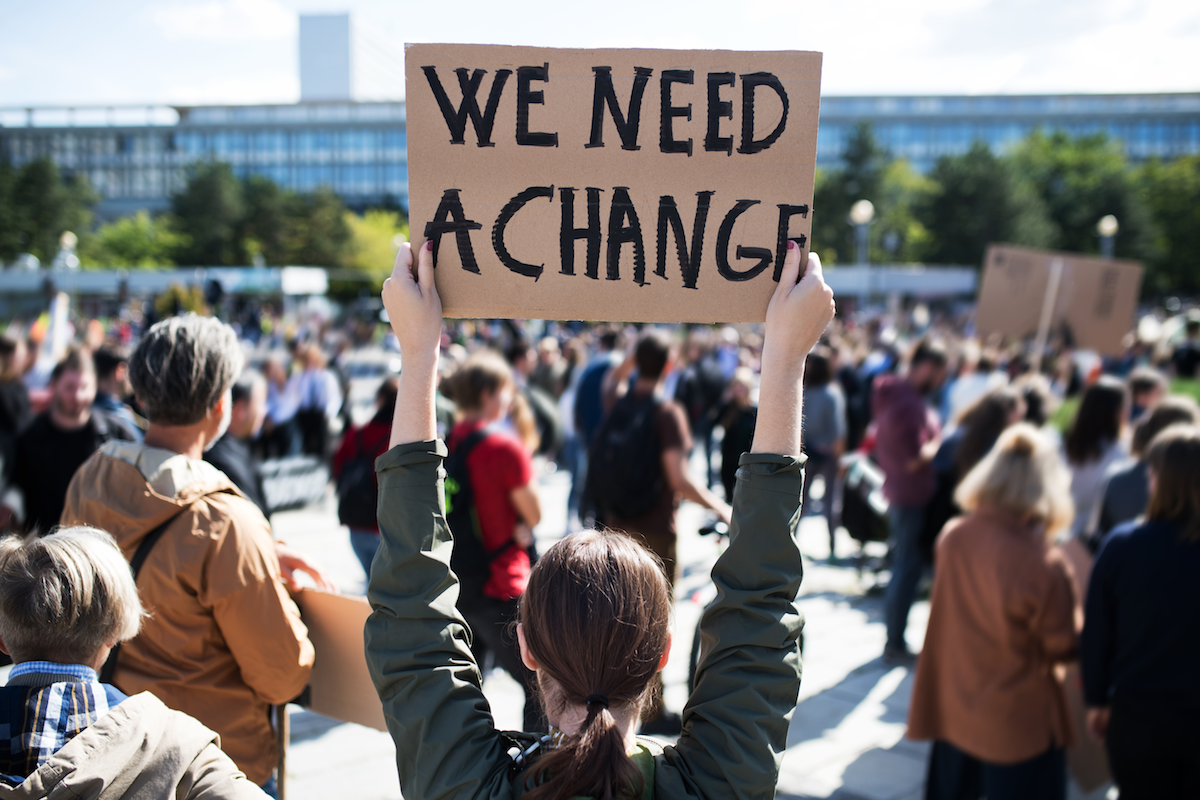
It’s important to understand the effects of political opinions on everyone in the workplace.
At a time when just consuming the news can cause mental health distress, political division in this country is high and leaders are working to make their workplace culture safe and inclusive for all. And offices—remote, in person and hybrid-- can include opinions others disagree with.
Not everyone must conform to one mindset. But it may be difficult for leaders to ignore the cultural tone as activists coordinated a National Shutdown for January 30 urging people across the country to stay home from work and school and not shop. This impacts businesses everywhere.
Fortune reports that “More than 60 CEOs of Minnesota-based companies signed a letter urging “an immediate deescalation of tensions” in the state following the recent killings of Alex Pretti and Renee Good by ICE border patrol officers.
“Among the CEOs and entities to sign the letter are Corie Barry, the CEO of Best Buy; Dana Erickson, the CEO of Blue Cross and Blue Shield of Minnesota; the NBA’s Minnesota Timberwolves and WNBA’s Minnesota Lynx; Gunjan Kedia, the CEO of U.S. Bancorp; and Beth Ford, the CEO of Land O’Lakes,” according to Fortune.
As hundreds of thousands of protesters across the world respond to the actions of federal agents, the need to understand how to welcome opinion and set boundaries is urgent.
Yes, leaders making public statements about political issues can reassure some employees, and make them feel understood. It can also introduce discord and volatility into the office for others, and increase their anxiety.
How leaders, employees, colleagues and human resource representatives deal with expressed opinions and attitudes completely matters as it can result in resignations, anger and enmity. That is because the world outside of work is wreaking havoc on mental health.
“How leaders, employees, colleagues and human resource representatives deal with expressed opinions and attitudes completely matters and can result in resignations, anger and enmity. @takeleadwomen #leadership #divisive #inclusive”
The larger bubble surrounding Americans is cracking. USA Today reports, “A new poll from The Economist/YouGov found a staggering 71% of Americans feel like the country is “out of control.” More than 60% say the country is on the wrong track, and 58% are dissatisfied with the way democracy is working.”
People bring their anxiety and dissatisfaction to work. And it’s causing discomfort.
A new “Politics in the Workplace Report” from Monster, shows, “Political talk remains a major source of tension on the job. Nearly seven in 10 workers (68%) say they’re not comfortable discussing politics at work, underscoring how polarization outside the office is affecting relationships and culture inside it, CPA Practice Advisor reports. .
“Politics in the Workplace Report @Monster: “Political talk remains a major source of tension on the job. 68% of workers say they’re not comfortable discussing politics at work.” #leadership #tension #workplace #politics”
The nationwide survey of more than 900 U.S. workers found “that while many employees (64%) respect differing political views, political expression at work can strain professional relationships and even influence job decisions. According to the survey, 33% admit they’ve judged co-workers negatively based on political views, and 51% would consider leaving their job if their company openly expressed political beliefs they didn’t agree with.”
They quit if they do not like the water cooler talk. It annihilates a sense of safety, and they want out.
Nearly half say they feel pressure to disclose their political leanings. “The study shows 40% feel pressure during informal conversations with co-workers, 15% during group meetings, 13% during interactions with clients or vendors, and 11% during discussions or reviews with managers or supervisors.”
Read more in Take The Lead on the power of women in politics
Opinions can bring anger, hostility and resentment that disallows collaboration and productivity.
There is a way to be a responsible citizen and a leader while not ostracizing others in the workplace who may believe differently.
The people who have the most influence — are most likely to be able to get things done, in other words to be leaders — stay consistent in their messaging and open to other points of view.
How a leader uses their power and influence matters. According to Gloria Feldt, co-founder and president of Take The Lead, “They use the power of their voices by being thought leaders. They write letters to editors. They call or write their elected officials to hold them accountable on issues. They aren’t afraid to speak up against bigotry when they hear someone deriding another person for her religion or his country of origin or the color of someone’s skin.”
“Gloria Feldt, co-founder, president @takeleadwomen on effective leaders: “They use the power of their voices by being thought leaders. They aren’t afraid to speak up against bigotry when they hear someone deriding another person for her religion or his country of origin or the color of someone’s skin.” #speakup #power #thoughtleaders”
Additionally, Feldt says, “They register their neighbors to vote. They canvass their district on behalf of candidates. Perhaps they run for office, perhaps not, but they do learn how their political parties, whichever they choose, operate and they get involved at the grassroots level.”
But effective leadership also sets boundaries to not turn the office into a politician’s campaign headquarters.
Read more in Take The Lead on women leaders
According to Security Week, “Politics can only harm this cohesiveness, and in doing so, can introduce significant risk into the business. Everyone is entitled to their own political beliefs, of course, but those beliefs should be kept out of the workplace, professional forums, and professional social media sites.”
But is it even possible to lock politics out of the office break room?
What can work, according to Security Week, is welcoming diversity of thought, but in a controlled environment of safe sharing, not favoring either side or opinion. “While we shouldn’t introduce politics to any work environment, we need to make sure that team members from all parts of the political spectrum feel comfortable.”
“While we shouldn’t introduce politics to any work environment, we need to make sure that team members from all parts of the political spectrum feel comfortable.”@SecurityWeek #workplace #leadership ”
Read more in Take The Lead on women in politics
It is not difficult to see in recent days, weeks and months, that the actions of ICE and immigration efforts are making workers take sides, whether their connection is personal or visceral.
NJ Politics reports on a new poll showing, “57% of Americans somewhat or strongly disapprove of the way that ICE is handling its job, while 37% approve. Another 83% of Democrats and 54% of independents strongly disapprove of the agency’s performance — a stark contrast to the 7% of Republicans that feel similar.”
Recently, some larger companies have taken steps to handle how employees and leaders speak about politics. The BBC reports, Tech company Intuit “put in guardrails for how employees can talk about divisive topics on company channels.”
Humera Shahid, Intuit's chief diversity, equity and inclusion officer, tells the BBC, "We want you to focus on how you're feeling and how things are affecting you as a person, and less on using our internal channels as a platform for your political views."
“Humera Shahid, @Intuit chief DEI officer to @BBC: “We want you to focus on how you’re feeling and how things are affecting you as a person, and less on using our internal channels as a platform for your political views.” #leadership #political #divide ”
“There are moderators, usually HR or people who lead employee resource groups, who monitor the company's messaging channels to flag offensive "language that could be hurtful or exclude’, according to company policy. For instance, posters or any resources or content distributed must be neutral," BBC reports.
Read more in Take The Lead on staying politically neutral at work
Is that enough instruction for team leaders and administrators on how to disarm toxic conversations? And why does it even matter what people talk about at work?
Surprisingly, political affiliation affects career decisions. Of course, don’t wear aggressively partisan hats or t-shirts, even buttons at work. This is not the same as wearing swag supporting any sports team, celebrity, TV show or movie.
“Political alignment seems to be a stronger determinant of employment decisions than race or gender," according to a 2025 study, on “Political Polarization and Organizational Communication,” from Massey University, North Shore, Auckland.
Read more in Take The Lead about safely embracing politics at work
“Research has linked polarization to increased incivility, stress, burnout, and turnover intentions; prejudicial hiring behavior; increased homophily in workplace relationships and reduced trust and willingness to cooperate.” The research also shows “that the United States exhibited the largest increase in polarization in recent decades.”
“Research: #Polarization linked to increased incivility, stress, burnout, and turnover intentions; prejudicial hiring behavior; increased homophily in workplace relationships and reduced trust and willingness to cooperate.” #stress #workplace ”
It is best to divert colleagues away from polarization by “facilitating interaction for co-workers to get to know each other beyond their political affiliations and working together on common goals, not concentrating on who voted for whom, and what side co-workers are on politically, particularly as divisions are so prominent in recent news.
As a leader you are welcome to your opinions and to express them in larger public landscapes, but do not make conversion to your point of view mandatory across the organization. Even though a leader may not require across the board agreement, research shows the views at the top matter to everyone on the ladder.
Feldt explains that as a leader, “The natural tendency to avoid conflict and controversy may seem like a safe bet in the short term, but it often leads to negative consequences in the long run. By staying silent or adopting a neutral stance, leaders may inadvertently send the message that they lack conviction, integrity, or concern for the people involved.”
Read more from Gloria Feldt here
“In today’s increasingly polarized and interconnected world, people expect transparency, authenticity, and values-driven leadership,” Feldt writes. “When standing at a moral crossroads, the most effective strategy is to address the issue head-on with empathy, honesty, and a willingness to engage in dialogue.”
“Research @KelloggSchool @NorthwesternU: Workers and employers were 50% more likely to belong to same party. Co-partisan workers were more likely to be hired, less likely to leave than other workers.” #politics #workplace ”
Know that your ideas matter and your openness to entertain others sharing ideas matters as well.
Read more in Take The Lead about women in politics in 2024
Insight Kellogg at Northwestern University reports that the extensive work of Edoardo Teso, an assistant professor of managerial economics and decision sciences at the Kellogg School, shows that, “Your political views may be a major factor in whether you are hired for a particular job in the first place.”
The research shows, “When workers are hired who do not share a political affiliation with the boss, they receive lower pay, get fewer promotions, and have a shorter tenure at the firm on average. That means personal political differences really can leave a mark on your career.”
“Gloria Feldt @takeleadwomen: “When standing at a moral crossroads, the most effective strategy is to address the issue head-on with empathy, honesty, and a willingness to engage in dialogue.” #leadership #bestpractices #empathy”
In a study of 12 million employers in Brazil, researchers found that political affiliation is a bigger factor than most everything else. “On average, workers and employers were 50 percent more likely to belong to the same party compared with that likelihood if they were randomly matched. Co-partisan workers were both more likely to be hired and less likely to leave the firm after being hired than other workers.”
Know that it matters what you believe, and also know how to communicate your political beliefs at work. Consistently engage in rapport filled with empathy and respect.
The phrase, “Keep your opinions to yourself,” may be time-worn, but it may also not be possible today.
“Keep open to the opinions of others,” could be the new leadership mantra.

“Know that it matters what you believe, and also know how to communicate your political beliefs at work. Consistently engage in rapport filled with empathy and respect. ”