
Indigenous Women Demand Equity, Recognition and Leadership They Have Earned
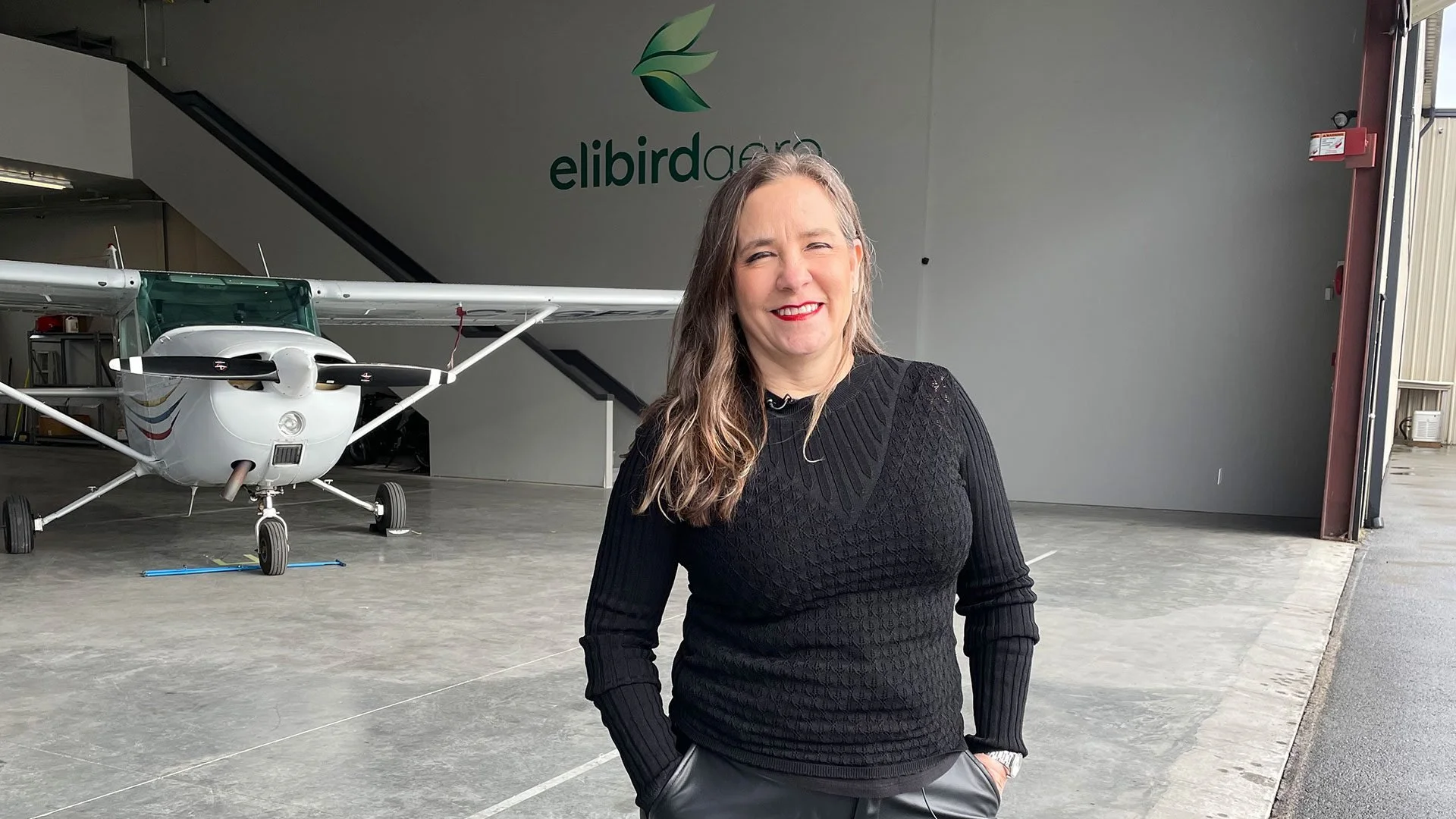
Teara Fraser, CEO and founder of Iskwew Air.
The ongoing history of all women needs recognition, respect and honor during Women’s History Month.
Read more in Take The Lead on Native American leaders
Indigenous Women in this country and around the world, are championing the major issues facing them including entrepreneurship, funding, business systemic inclusion, fairness, climate leadership and acknowledgment of the horror that is the ongoing crisis of Murdered and Missing Indigenous Women and Girls.
“Listen to us, not as voices from the margins, but as equals,” Indigenous leaders Nemonte Nenquimo, Hindou Oumarou Ibrahim and Rukka Sombolinggi, said at the recent UN COP30 summit in Belém, Brazil.
“Listen to us, not as voices from the margins, but as equals,” #Indigenous leaders Nemonte Nenquimo, Hindou Oumarou Ibrahim and Rukka Sombolinggi, said @UN COP30 summit.”
Read more in Take The Lead from Native American author Mary Annette Pember
According to Eco Business, the speakers told the group, “We come from three continents and three different ecosystems, but our message is one: our territories are not carbon sinks or green investments. They are living systems of culture, economy, and spirit. When they thrive, humanity thrives. When they fall, the planet’s balance collapses.”
They added, “We will not come as symbols or stewards of someone else’s plan. We will come as the peoples of the Earth’s living forests and ecosystems: political actors, landholders and leaders of solutions the world urgently needs.”
There are 131,064 American Indian and Alaskan Native women-owned businesses in the United States, the U.S. Small Business Administration reports as of the latest data available from 2012. In a 2025 study, with numbers not broken down by gender, “there are 408,519 Native-owned businesses operating across the U.S.”
“There are 131,064 #AIAN women-owned businesses in US: @SBA #womenleaders #entrepreneurship ”
These Native-owned businesses “added approximately $92.5 billion dollars to the national economy in 2021. Native American-owned firms employ nearly 300,000 representing 1.2% firms in the U.S. in 2021.
Gloria Feldt writes that in 2018, for women entrepreneurs, “The Asian American and Native American/Alaskan Native segments also had higher rates (314% and 201%, respectively) than the overall average, as reported in American Express Open’s annual “State of Women-Owned Businesses.”
Read more in Take The Lead on Indigenous leader
The highest-earning Indigenous woman in the country is Judy Love, co-founder of the gas station chain Love’s Travel Stops & Country Stores, who founded the chain with her late husband, Tom Love, is worth an estimated $13.1 billion, according to reportage by Forbes.
“The highest-earning Indigenous woman in the country is Judy Love, co-founder of Love’s Travel Stops & Country Stores, worth an estimated $13.1 billion.”
Aviator Teara Fraser in 2017 founded Iskwew Air, as Iskwew comes from the Cree word for “woman.” According to International Indigenous Speakers Bureau, “Fraser has taken her passion for connecting hearts and minds beyond the runway and into the establishment of The Raven Institute and The Indigenous LIFT Collective. Both organizations operate with Fraser’s dedication to reclaiming Indigenous traditions: elevating more women into roles of power to diversify leadership or ‘re-matriate’ as Fraser has coined, and emphasizing the Indigenous way of respect to Mother Earth through minimization of the carbon footprint.”
Read more in Take The Lead on Indigenous leadership
And there are many more success stories. According to The Story Exchange, “Bobbie Racette made history as the first Indigenous woman to close a Series A funding round of over $8 million for her company, Virtual Gurus. Since starting up, her company’s value went from $300 in 2016 to over $40 million.
Tamarah Begay, CEO, Indigenous Design Studio + Architecture LLC, “was the first Navajo woman to become a licensed architect. A member of the Navajo Nation, the largest Indigenous group in the country, she also founded the first architectural firm owned by a Navajo woman, in Albuquerque, New Mexico,” Investopedia reports.
Karlene Hunter, CEO and Co-Founder, Native American Natural Foods, is a member of the Oglala Sioux Tribe and earned the 2007 Small Business Association (SBA) Small Business Woman of the Year for South Dakota, as well as the 2012 Vision Leadership Award from the Specialty Food Association, Investopedia reports.
Read more in Take The Lead on education for Indigenous youth
Lacey A. Horn, CEO of Native Advisory, a financial consulting firm focused on helping tribal leaders, also runs the cryptocurrency consulting firm Horn CPA. In 2014, she was named the Native American Finance Officers Association’s Executive of the Year, according to Investopedia.
Shadiin Garcia, Ph.D., is the new Executive Director of Native Women Lead, an Albuquerque-based nonprofit that supports Native women entrepreneurs.
Yes, there are many other top CEOs, founders, leaders and entrepreneurs, in this country who are Native American women, yet the wage gap for most working Indigenous women is reprehensible. This is challenging as culturally, for Native women, they exist in a matriarchy with women assigned the highest respect for spiritual leadership in the community and most often women are the breadwinners in the household.
“Native women exist in a #matriarchy with women assigned the highest respect for spiritual leadership in the community; most often women are the #breadwinners in the household.@leadership”
Read more in Take The Lead on Indigenous founder
Data shows, “Median wages for Native women in the United States are $32,271 per year, compared to median wages of $61,229 annually for white, non-Hispanic men. These lost wages mean Native women have less money to support themselves and their families, save and invest for the future, and spend on goods and services. Families, businesses and the economy suffer as a result.”
Additionally, “that figure does not include approximately 40 percent of Native women who held part-time or short-term jobs. Overall, Native American women lose almost $69.2 billion to the wage gap every year.”
According to the National Partnership, “Approximately 56 percent of Native mothers are key breadwinners for their families, which means their households rely heavily on their wages to make ends meet and get ahead.”
Read more in Take The Lead on Deb Haaland
One in four Native American households, “or more than 525,000 households – are headed by women, and almost 30 percent of those households live below the poverty level.”
And while women are the majority of students in higher education, the Annie E Casey Foundation reports, “In 2022, one in three (33%) AI/AN young adults ages 18 to 24 were enrolled in college or had a bachelor’s degree, 15 percentage points below their peers nationwide (48%) and below figures for other racial and ethnic groups with data. At the same time, this college enrollment or completion statistic for AI/AN young adults is up from 27% in 2016.”
“AI/AN populations experience sadness, anxiety, anger and shame related to the traumas they have faced — including forced migration, broken treaties and loss of land, family ties, language and culture. .#education #leadership @takeleadwomen”
Additionally, “A 2023 National Academies of Sciences, Engineering, and Medicine report found that AI/AN populations experience sadness, anxiety, anger and shame related to the traumas they have faced — including forced migration, broken treaties and loss of land, family ties, language and culture.The report also called for more data on AI/AN well-being and recommended making this a federal priority.”
Read more in Take The Lead on Indigenous women in climate
Thankfully, political representation for Native American women has been increasing, and the midterms this year include Indigenous women candidates. According to Indian Country News, former Idaho state Rep. Paulette Jordan, Coeur d’Alene, is a Democratic candidate for Idaho governor.
Additionally, “Among the well-known Native candidates: former U.S. Interior Secretary Deb Haaland, running for governor of New Mexico; Minnesota Lt. Gov. Peggy Flanagan, running for U.S. Senate; and U.S. Rep. Sharice Davids of Kansas, who is reported to be weighing a run for the Senate if not re-election to her congressional seat. Minnesota Lt. Gov. Flanagan, White Earth Nation, would be the first Native American woman to serve in the Senate.”
“Many #Nativewomen candidates in midterms: former U.S. Interior Secretary @DebHaaland, running for governor of New Mexico; Minnesota Lt. Gov. @PeggyFlanagan, running for U.S. Senate; and U.S. Rep. Sharice Davids of Kansas. #political #leadership ”
ICT News reports, “Rep. Michelle Pauline Abeyta for District 69. Abeyta is a Democrat and Navajo Nation citizen. Abeyta is part of the 57th New Mexico Legislature with one of the largest female majorities in U.S. history and the first ever majority female legislature for the state.”
Ms. Magazine recently reported a higher number of Native American women in Montana running for office. “Amid political uncertainty, Native American women in Montana are leading social justice movements and shaping public policy. Historically marginalized in policymaking, Native voices are now gaining equitable representation at the state level, driving impactful change.”
Read more in Take The Lead on Native American women in office
Ms. Reports, “In 2024, Montana had 12 Democratic Native legislators, including five women: Sen. Susan Webber, Rep. Jade Sooktis, Rep. Shelly Fyant, Sen. Jacinda Morigeau and Rep. Thedis Crowe. These leaders advocate and take action, transforming Montana’s policy landscape and inspiring future generations.”
Policymakers representing this Indigenous culture have an ongoing list of injustices to address and remedy. According to Data for Indigenous Justice, Missing and Murdered Indigenous Women and Relatives had 5,712 cases in 2016. Four in five Native American Indian and Alaska Native women and girls experience violence in their lifetime
Several nonprofit organizations are demanding justice and seeking awarerness of this critical need for updates on the missing and murdered women, particularly after the Department of Justice recently removed all data from the Missing and Murdered Indigenous Report from its website. Citing that the report was a DEI effort, all data was taken down.
“NPOs demanding justice and awarerness of updates on missing and murdered women, particularly after @DOJ removed all data from the Missing and Murdered Indigenous Report from website.”
Further investigations are also urged for the federal-endorsed crime of forced sterilzations of Native American women, done by the HIS from 1907 up to 2018. According to Native News Online, HIS, the “federal agency tasked with providing health care to millions of Native people across the United States” did these grotesque procedures.
Robin Wall Kimmerer, Indigenous scientist, botanist and best-selling author of Braiding Sweetgrass and the more recent, The Serviceberry: An Economy of Gifts and Abundance.is a SUNY Distinguished Teaching Professor of Environmental Biology, and the founder and director of the Center for Native Peoples and the Environment.
Take The Lead reported in 2025, “There has been erasure of native history and knowledge,“ says Kimmerer, Citizen Potawatomi Nation member, founder of the movement, Plant Baby Plant.“We have to give gratitude to the land, and live in a way that land will be grateful for us.”
In a recent issue of Stanford’s Social Innovation Review, artist, writer and activist Jihan Gearon, an expert in environmental and climate justice, just transition, Indigenous Peoples rights, and Indigenous feminism, writes that there is a distinction to be made about what is Indigenous feminsim.
“Loosely defined, Indigenous feminism is an intersectional theory and practice of feminism that focuses on decolonization, Indigenous sovereignty, and human rights for Indigenous women and their families,” Gearon writes.
“Indigenous #feminism is an intersectional theory and practice of feminism that focuses on decolonization, #Indigenous sovereignty, and human rights for Indigenous women and their families,” @JihanGearon writes.@takeleadwomen”
“Most importantly, our feminism remembers and can call upon a history in which our matriarchal systems—something mainstream feminism hasn’t yet achieved—not only actually existed but were practiced as essential aspects of our cultures.”
Some efforts nationally are looking to change that. At Arizona State University, the global headquarters of Thunderbird School of Global Management has offered for more than 10 years Project DreamCatcher. “It is a free, culturally grounded business education program created by the Freeport-McMoRan Foundation in partnership with Thunderbird. Its goal is to build the capacity of women business owners from tribal nations across Arizona.
“Since launching in 2015, Project DreamCatcher has graduated approximately 350 Indigenous women and supported the creation or growth of nearly 120 Native-owned businesses across industries including food, health care, consulting, logistics, technology and cultural preservation.”
“Sage Ke’alohilani Quiamno, CEO, co-founder of @FutureForUs, “We’ve accomplished #visibility, and shown our resilience, strength, ambition to create a better workplace and society for ourselves by creating solutions together.”
Sage Ke’alohilani Quiamno, CEO and co-founder of Future For Us, a community platform of more than 10,000 women of color professionals, told Take The Lead in 2020, “We’ve accomplished visibility, and shown our resilience, strength, ambition to create a better workplace and society for ourselves by creating solutions together.”
