
Jane Doe at Work: How To End Sexual Harassment in Workplace
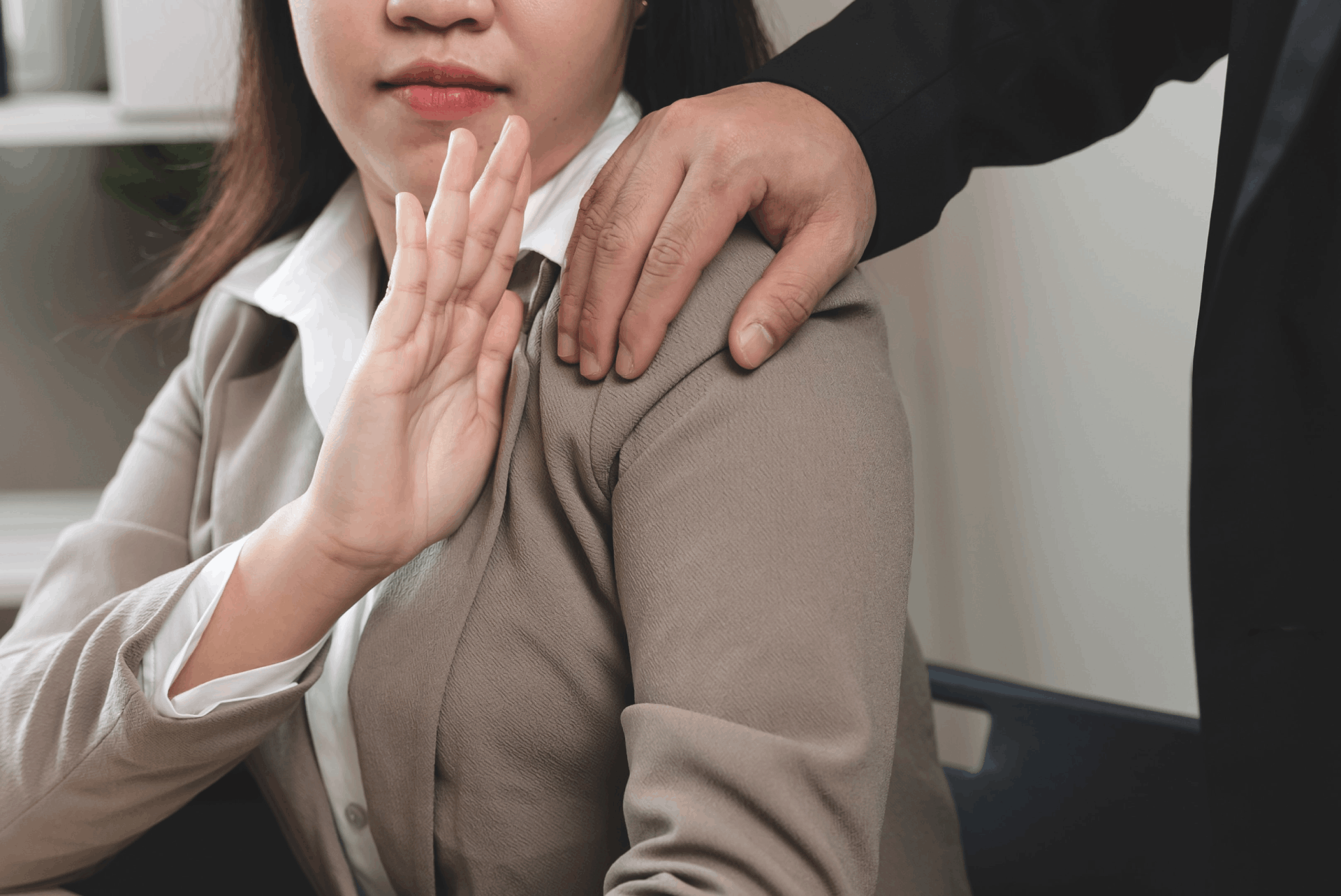
Women and men in the workplace must speak up and stand for Jane Doe in any and every reported account of sexual harassment, discrimination or sexual violence at work or work-related functions.
The brutal account enumerated in a lawsuit brought recently by Jane Doe, a Cornell University student who names seven male fraternity brothers in her accounts of sexual assault in 2024, underscores the urgency for systems in place to end sexual harassment and assault everywhere, including the workplace.
“#JaneDoe ‘s lawsuit against @CornellU re her sexual assault in 2024, underscores the urgency for systems in place to end #sexualharassment and assault everywhere, including the #workplace.”
Stories of workplace sexual harassment seem as old as time, going back to Hollywood representations including the 1937 film, “Ever Since Eve,” the role reversals of Jack Lemmon, Tony Curtis and Marilyn Monroe in the 1959 blockbuster “Some Like It Hot,” the 1980 Dolly Parton hit, “9 to 5,” as well as the 2022 “She Said,” about Harvey Weinstein.
From academia to public and private schools, nonprofits, construction, security, mining, finance, retail, media, entertainment, politics, hospitality, restaurants and just about any industry in existence, women—and men—have reported sexual harassment, discrimination, bias and assault. There are varying results and outcomes.
Read more in Take The Lead on sexual harassment at work
“Women filed over 78 percent of sexual harassment charges received by the U.S. EEOC between 2018 and 2021,” according to CBS News. “About 40% of working women experience such treatment during their careers, ranging from sexist jokes to having obscene comments directed toward them,” the McKinsey & Company study found.
“40% working women experience sexual harassment during their careers, ranging from sexist jokes to having obscene comments directed toward them, @McKinsey study.”
Read more in Take The Lead on stopping sexual harassme
“Women under 30 were just as likely to have experienced sexual harassment as women over 30, a finding that signals the issue hasn't diminished in scale over the past several years,” the study noted.
Quite disturbing is the finding that “sexual harassment remains persistent despite the rise of the #MeToo movement in 2017, with a number of prominent women coming forward to disclose the abuse they had endured at work and demanding changes in the workplace. Still, only about half of women today express confidence that their employers would effectively deal with harassment if they reported it, little changed from 2018,” the report states.
“Half of women today express confidence that their employers would effectively deal with harassment if they reported it, @McKinsey study.”
Read more in Take The Lead on Anita Hill and ending gender violence
Ironically, Cornell ILR School's Worker Institute, conducted the New York State 2024 Empire State Poll concerning the workplace impacts of sexual harassment and intimate partner violence, and found the problem to be nearly universal.
“When it comes to reaching leadership parity for women, the reality is sexual violence holds us back, makes us doubt ourselves, and our self-esteem and leads to higher rates of anxiety and depression,” says Gloria Feldt, co-founder and president of Take The Lead.
“When it comes to reaching leadership parity for women, the reality is #sexualviolence holds us back, makes us doubt ourselves, and our self-esteem and leads to higher rates of anxiety and depression,” says Gloria Feldt, co-founder, pres @takeleadwomen ”
Listen to Gloria Feldt here on addressing sexual harassment in workplace
Calling sexual harassment, violence and discrimination a “workplace hazard,” Feldt says, “Sexual harassment deters women from seeking advancement and therefore women’s talents are not used.” She adds, “Sexual harassment is baked into the culture like salt into the food we eat.”
Addressing the problem directly with “approaches in education, organizing, advocacy and local legislative strategies, with a particular focus on the role unions, allies and advocates can play in providing essential resources, support, and otherwise taking action” can mitigate the problems, according to the Cornell research.
Efforts are underway now to do just that.
Michele Decker, ScD, MPH, Bloomberg Professor of American Health in the Department of Population, Family, and Reproductive Health at the Bloomberg School at Johns Hopkins Bloomberg School of Public Health led a team that developed a new toolkit designed to help communities move the U.S. National Plan to End Gender-Based Violence from a national framework to meaningful action at the local levels.
“Michele Decker, prof @JohnsHopkins Bloomberg School of Public Health led team to create toolkit to move U.S. National Plan to End #GenderBasedViolence to meaningful action at local levels.”
The goal is to implement programs at the state and city levels. “The Plan provides guidance on how local data can galvanize action, and ensure that progress does not depend entirely on federal priorities. The tools were developed in close collaboration with national partners, with support from the Bloomberg American Health Initiative, and are timely given October is Domestic Violence Awareness Month,” according to Johns Hopkins. .
The toolkit offers “guidance on using the new resources in advocacy, community, and policy meetings to inform policy, resource allocation, and public education; technical support opportunities to meet the needs of state and city agencies, advocates, and community partners and a resource directory of GBV data and policy compendia available electronically,” according to the Hopkins release.
This is critical because the prevalence of workplace sexual harassment is historic and ongoing.
Even though the Equal Employment Opportunity Commission keeps data on sexual harassment in the workplace, as harassment is considered illegal discrimination, there is a high incidence of sexual harassment and misconduct in Congress. A new bipartisan movement is in place to end this trend.
Read more in Take The Lead on sexual discrimination in restaurant industry
"No woman — regardless of party, title, or position — should ever feel unsafe in her workplace. Period,” said Republican Women’s Caucus Chair Kat Cammack (FL-03). “As Chair of the Republican Women’s Caucus, I am proud to be leading a bipartisan effort alongside the Democratic Women’s Caucus to take a hard look at the systems, reporting mechanisms, and workplace culture on Capitol Hill surrounding sexual harassment and assault,” reports the DWC.
However, there are cases of those accused claiming “cancel culture” unfairly targeted them. “A Massachusetts Institute of Technology biology professor forced out of his job over sexual harassment allegations won a defamation case against his accuser along with a $6 million award,” People reports.
“The sad reality of our time is that society still has a difficult time believing women and appreciating the difficulty they encounter with men who too often control their fate, said Ellen Zucker, attorney for Dr. Kristin Knouse in the case. People reports thta Zucker said, “Dr. Krause came into court and told the truth.”
According to the latest statistics available, “An estimated 70% to 90% of workplace harassment is never formally reported. Roughly 25% to 40% of women and 10% to 20% of men report experiencing workplace sexual harassment in their careers.
“ 70% - 90% of workplace harassment is never formally reported. Roughly 25% to 40% of women and 10% to 20% of men report experiencing workplace #sexualharassment in their careers.”
There are also current legal victories upholding accountability for sexual harassment at work.
Read more in Take The Lead on changing the system to erase sexual harassment
According to Ogletree, an unnamed former security guard won a $5.5 million verdict suing C&M Defense Group, which now operates as Global Security Management Team, “claiming that her supervisor, the vice president of operations at the time, subjected her to unwanted sexual comments, repeated sexual advances, and threats of physical violence after she rejected his advances in 2022. She claimed her supervisor made sexually explicit remarks and asked her to go to a strip club and a hotel with him—which she refused to do. A month later, she claimed he pushed her against a wall, groped her, and unzipped his pants at a worksite. She said he offered her financial favors and a promotion in exchange for sex. She used a recording device to record that incident.” The company did nothing to stop the harassment.
In 2018, Stop Street Harassment commissioned a 2,000-person, nationally representative survey on sexual harassment and assault, conducted by GfK and found that nationwide, 81% of women and 43% of men reported experiencing some form of sexual harassment and/or assault in their lifetime.”
The report shows that harassment includes “being catcalled or whistled at or getting unwanted comments of a sexual nature. It also includes physical harassment, cyber harassment and sexual assaults.” Many of these occur in the workplace.
“@StopStreetHarassment survey: 81% of women and 43% of men reported experiencing some form of sexual harassment and/or assault in their lifetime.”
Read more from Gloria Feldt on sexual violence at work
The study shows “77 percent of women had experienced verbal sexual harassment, and 51 percent had been sexually touched without their permission. About 41 percent said they had been sexually harassed online, and 27 percent said they had survived sexual assault.”
More than 700 employees of Chicago Public Schools were found to have engaged in some form of sexual misconduct or discrimination from January 2025 to January 2026. Yet only 10 resigned or were fired, according to WTTW.
The incidents of workplace sexual harassment is worldwide, and not confined to any one industry or age group.
In the United Kingdom, Farrer reports that a YouGov poll of 1,000 employees “found that nearly a quarter (24%) agreed that recent international media coverage of sexual harassment has had a positive impact on their workplace culture.”
But it is not enough to just talk about the need to end workplace sexual harassment. There must be training, awareness and definitive action for perpetrators.
“A UK @YouGov poll: 24% agreed that recent international media coverage of sexual harassment has had a positive impact on their #workplace culture.” ”
The Guardian reports that in 2025-26, 109 workers at “BHP lost their jobs, or resigned, after sexually harassing colleagues, which included numerous instances of indecent touching, stalking and grooming.” BHP is the world’s biggest miner with iron ore and copper operations in Australia, and North and South America.
Read more in Take The Lead on gender discrimination
Awareness and action initiatives are key. The University of Utah reports, “The Start by Believing campaign launched by End Violence Against Women International is an impactful program that teaches individuals how to respond when someone they know discloses sexual abuse, assault, or other forms of gender-based violence. Studies have shown that victims who receive a positive response when informally disclosing an assault are more likely to make a formal report to authorities.”
“ @UniversityofUtah: The #StartbyBelieving campaign launched by #EndViolenceAgainstWomenInternational teaches individuals how to respond when someone they know discloses sexual abuse, assault, or other forms of gender-based violence. ”
Workplaces need to have definitive policies in place and there need to be strict laws governing the workplace about proven acts of sexual harassment and misconduct.
In the UK, new laws starting this month, October 2026, under the Employment Rights Act 2025 require employers to take “all reasonable steps” to stop sexual harassment and “prove they left no reasonable option untried. The legislation has shifted responsibility from reacting to harassment to actively preventing it, but many firms remain unclear on how to build this into their culture in any meaningful way.”
“In October in UK, Employment Rights Act 2025 requires employers to take “all reasonable steps” to stop sexual harassment and “prove they left no reasonable option untried. The legislation has shifted responsibility from reacting to harassment to actively preventing it, but many firms remain unclear on how to build this into their culture in any meaningful way.”
Read more in Take The Lead on sexism at work
A workplace culture needs to be one where anyone enduring sexual harassment can feel safe and comfortable speaking up and reporting the incident. Rather than allow fear of retaliation and shame to prevent reporting, Biz Journals suggests that leaders and managers support survivors and “work hard to negotiate terms that prevent the harasser from disparaging the survivor going forward.”
Training that is meaningful and not a one-off presentation must be ongoing in workplaces , as it is in some universities for students.
Inside Highr Ed reports, “Cornell—the epicenter of the current campus sexual assault conversation—is working to expand its prevention efforts beyond one-off training. These include developing required, in-person small group training sessions at new student orientation, and using students’ first semester to “reinforce this messaging and to provide additional education and engagement” with programming such as peer-led workshops.”
The power imbalance present in sexual harassment in all cases “are power over techniques used to keep women silent and secondary,” says Feldt.
Read more in Take The Lead on #MeToo
“But if we shift the power paradigm of the ‘power to’ prevail over it, we can ameliorate the effects of those experiences. Specifically use the power of your voice to speak the truth and to speak up for those with less power,” Feldt advises.
“Gloria Feldt @takeleadwomen: “If we shift the power paradigm of the power to prevail over it, we can ameliorate the effects of those experiences. Specifically use the power of your voice to speak the truth and to speak up for those with less power.”
Read more on 9 Leadership Power Tools Course
Secondly, she says, “Listen to the voices of women and let them know they are heard and believed and that their words and talents have value.”
Finally, Feldt says, “Don’t agonize, organize to make systemic change.”
