
We Lost the Grant. We’re Not Losing This Fight
Issue 2901 -October 26, 2026
Shortly after I published a post saying there is always a way to make something important happen, life made me prove it.
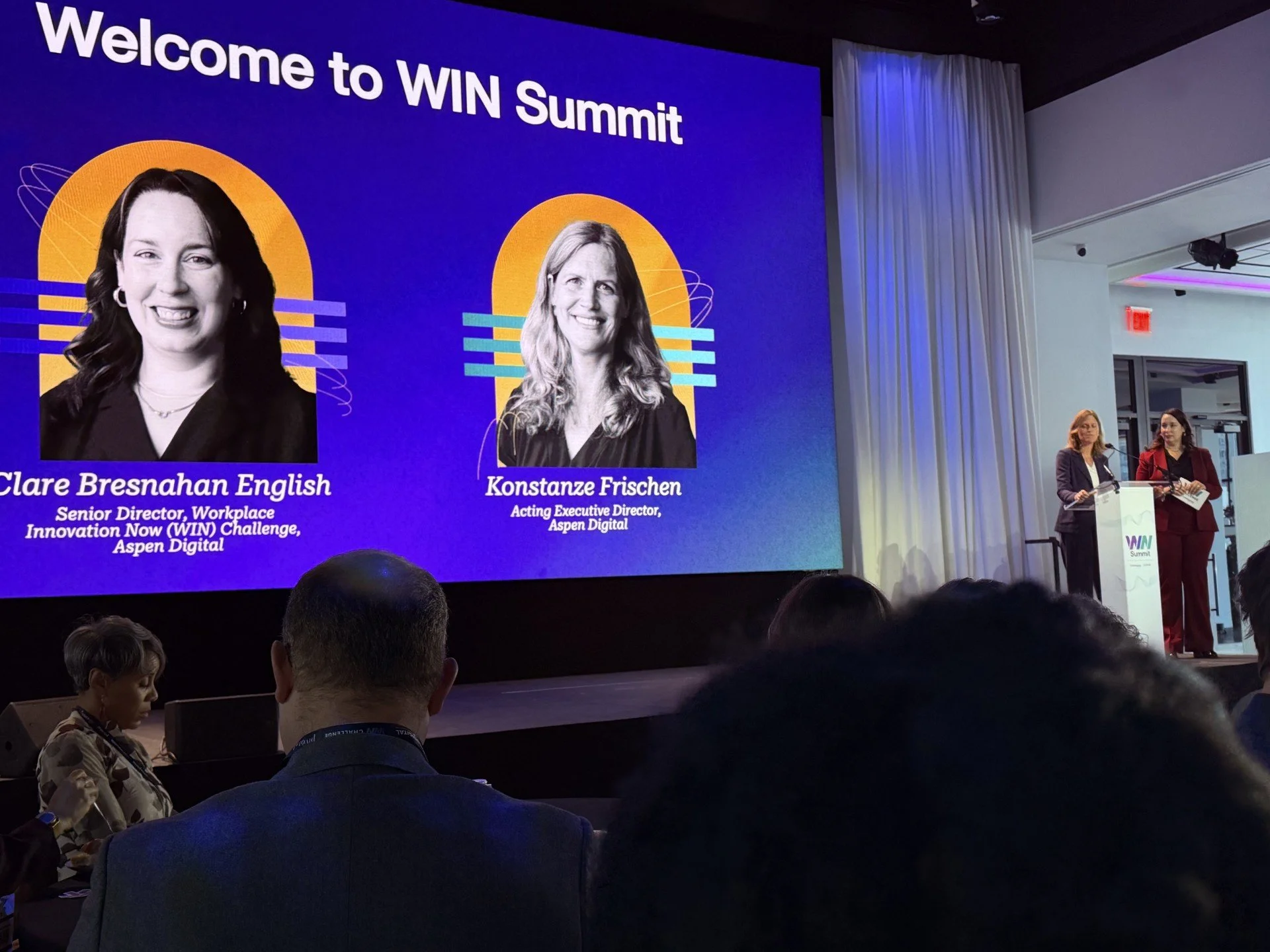
On October 22, I walked into the WIN Summit at New York’s Glasshouse with a knot in my stomach. The room was celebrating 18 winners of a $60 million competition from Melinda French Gates’s Pivotal Ventures and Aspen Digital. The challenge sought proposals for projects with the overall goal to create workplaces that work for women. The funders solicited projects that propose solutions in three categories: narrative, culture and practice, and AI.
I came to cheer the winners and appreciate the effort the funders put into the endeavor. I also came bearing the disappointment of someone who had not won.
Take The Lead’s proposal in the AI category made the first cuts. We had poured ourselves into it. Standing in that energetic room, I felt the loss all the way down.
From my decades of experience with changemaking and movement leadership, I know deeply that until women have equal leadership positions, power, and pay, we will keep fighting the same battles and never fully win them. And I’m proud that Take The Lead’s leadership development program has been proven to accelerate the goal of gender parity In leadership regardless of sector.
I left without a check. I did not leave without my conviction: the leadership gap is the problem, and closing it is the solution.
Women should hold half the senior decision-making seats in how AI is built, bought and governed. Women from communities that have been excluded must be part of that half. And people from other underrepresented groups need meaningful authority in those decisions too. They need to know and embrace their power in order to elevate their intentions for leadership. They must be intentional about working together to advance other women into the leadership, lifting as they climb, and enlisting men who share these goals. These are unique aspects of our program. This is about mindset first, then technical skills. And that is why it is effective regardless of the industry.
The results speak for themselves. An external evaluation found that within six months, 40% of the women who completed our program had achieved a higher level of leadership role. And 90% felt more powerful, while 80% said they are more likely to support other women.
Something else I noticed in the Summit speakers gets cured by our techniques. There’s another gap.
Call it the optimism gap.
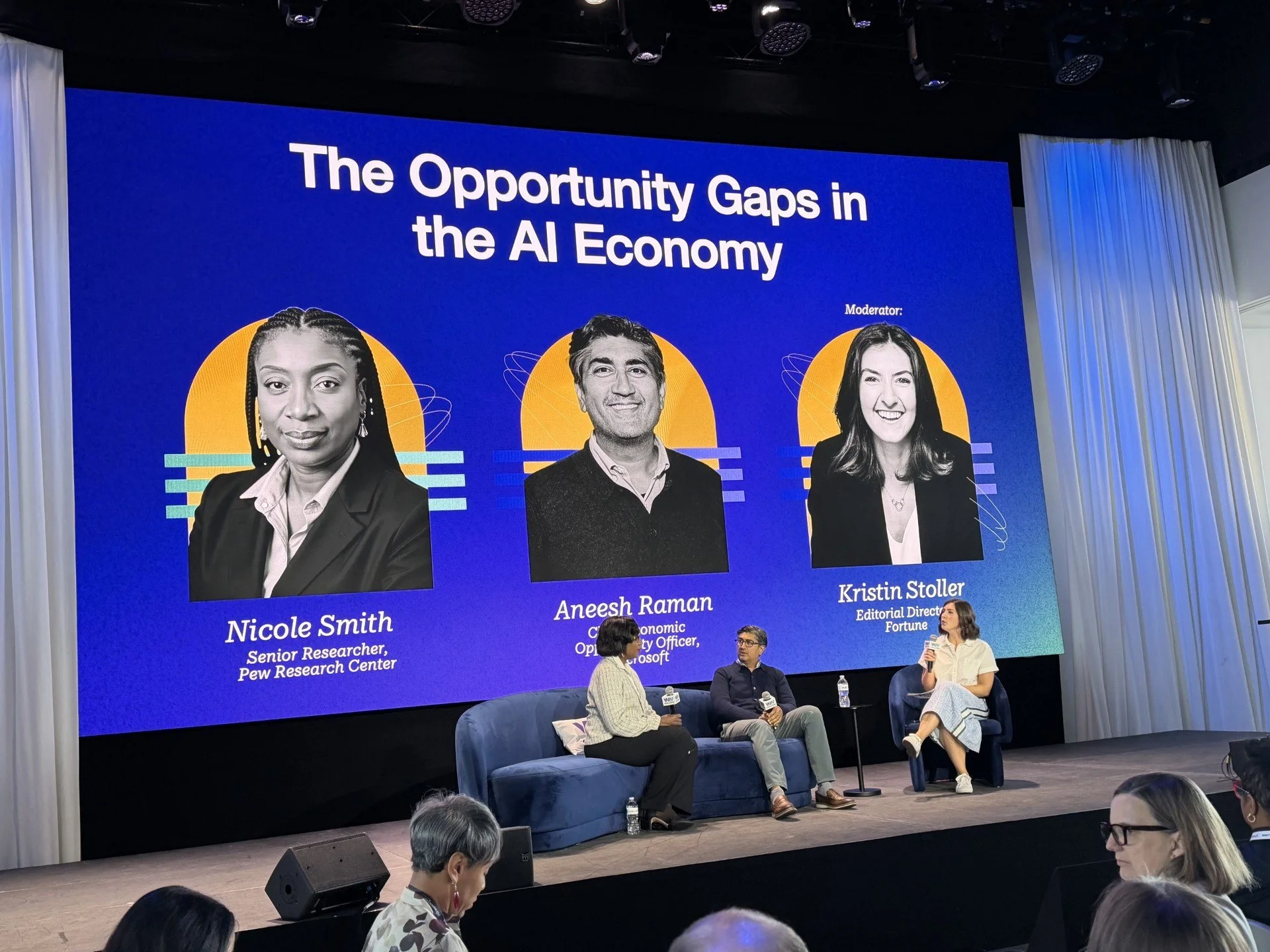
On stage, the men saw opportunity. Aneesh Raman, Microsoft’s Chief Economic Opportunity Officer, for example, described how each of us can train our own AI to reduce its bias, and predicted that women’s culturally learned leadership skills could drive gender parity if we realize we have the agency we have to do so.
The women on panels by and large shared data on the very real disparity and discrimination. Same technology, two very different views of it. One view makes you optimistic, the other depresses you.
How the pattern gets made
This is the third of a series I’m writing on women and AI. In part one, I showed that AI inherits the inequalities in the culture it learns from. In part two, I showed women like Lisa Su and Fei-Fei Li building their own terrain. This third post answers the question both left open: how do we stop the pattern overall so that it’s not merely two women among a sea of men leading the way?
Bias doesn’t slip into AI by accident. It gets in through decisions. What problem are we solving? How is it framed? Whose data counts? What does success look like? Who tests it? Can anyone appeal? Every one of those questions has a person sitting behind it. When those people share one view of the world, the questions they’ve never had to ask never get asked.
The optimism gap is that dynamic in miniature. Those who have never been on the wrong end of a biased system are acculturated to see opportunity. Those who have not had that privilege tend to see the dismal data first and start with focusing on the problems. Both people are right. But a technology steered only by one group ships first and might get corrected only later if at all, after real people are harmed.
Gender parity in leadership breaks that pattern. Not because women are wiser by nature, but because people who know what it feels like to be mismeasured are more likely to ask the question that stops the harm before launch, and women in leadership have the authority to make the answer stick.
Meet the Hedy Initiative
Hedy Lamarr was dismissed as a pretty face during World War II while she co-invented a technology that underlies modern wireless communication. Take The Lead’s proposal is named for her, and for every woman whose genius the world looked past.
Here is the “how” I promised.
The Hedy Initiative brings our proven 50 Women Can Change the World program to women with the potential to lead AI. Each cohort of 50 women claims its power, applies AI skills to the work it actually does, and gains the authority to question, train, buy, govern and change these systems. Being in a cohort instills the power of working together to advance not just themselves as individuals but also to lift women in their industry at the same time. Every technology brings with it both promise and problems. Human skills are essential to shape both the benefits and solutions.
Now picture it at scale: 10 cohorts over three years, each one a movement, together a movement of movements. Cohorts of women building AI companies. Others of women inside companies that create or distribute it. Others in the organizations that use it, which is all of them. We’ll publish what changes, so you’ll see exactly what your gift accomplished.
What it will take
We need $500,000 to launch the first cohort, evaluate it and prove it works for AI, so we can raise the rest as we deliver.
· $10,000 puts one woman through the program
· $50,000 sponsors five
· $500,000 launches an entire cohort
If you can consider making a lead gift, matching gift, or fund a full cohort, reply to me and I will call you personally to discuss it.
These are big numbers. But any amount helps, even $1. Contribute here to show your support. And include a note to tell me how you’d like to be involved—as a participant, advisor, or fundraiser.
We didn’t win a grant. But I refuse to lose the future.
Will you help Take The Lead build the cohorts that create the future?
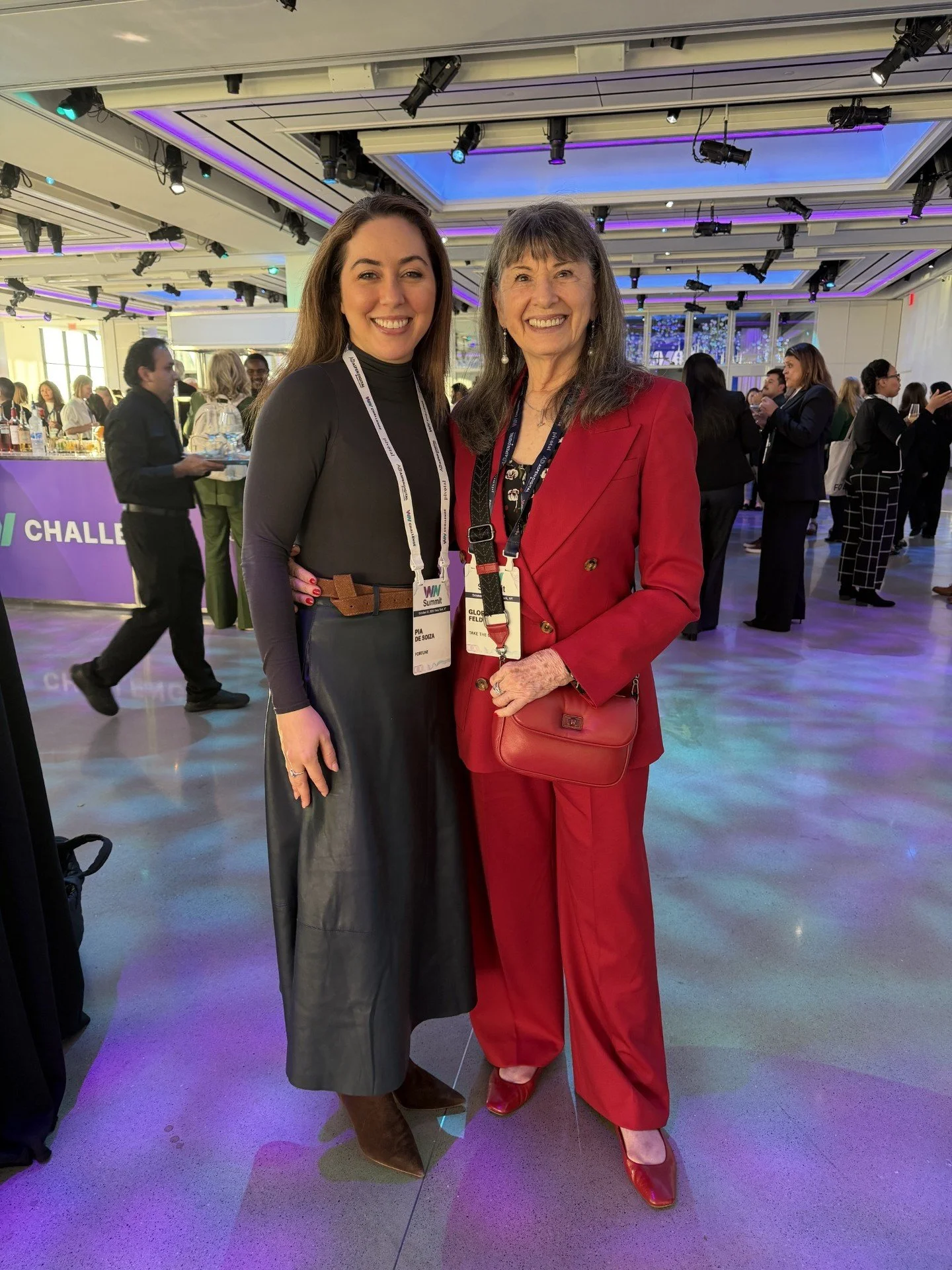
Such a pleasure reconnecting with Pia De Soiza, who came up to tell me how much being in our 50 Women Can Change the World in Journalism cohort had helped her develop her career.
GLORIA FELDT is the Co-founder and President of Take The Lead, a motivational speaker, and a global expert in women’s leadership development and DEI for individuals and companies that want to build gender balance. She is a bestselling author of five books, most recently Intentioning: Sex, Power, Pandemics, and How Women Will Take The Lead for (Everyone’s) Good. Honored as Forbes 50 Over 50, and Former President of Planned Parenthood Federation of America, she is a frequent media commentator. Learn more at www.gloriafeldt.com and www.taketheleadwomen.com. Find her @GloriaFeldt on all social media.