
Jensen Huang: The Bigger They Are…

My father took me to a Golden Gloves fight when I was about five years old. (Questionable judgment, I know, but he tended to treat me like a person with a brain.)
In one match, a man was so much bigger than his opponent that I figured he had to be stronger. Then the smaller man landed a punch, and down went the bigger man with a thud.
Dad turned to me and said, “The bigger they are, the harder they fall.” I never forgot that lesson: the bigger person isn’t always the stronger one. And everyone has
vulnerabilities. Think David and Goliath.
I remembered it when Jensen Huang resigned or was pushed out in a precipitous fall. You couldn’t get much bigger than the founder and CEO of Nvidia, the company whose chips power
so much of the AI now finding its way into our businesses, our government, and our daily lives.
It’s ironic to see the man at the forefront of the most advanced technology in the world getting KO’d by the most feral of human desires.
Huang publicly acknowledged that he had been unfaithful to his wife with multiple women. Nvidia’s board opened an independent investigation after reports that he may have been the target of a foreign intelligence effort.

The investigation has its work to do. In the meantime, there is a question that applies well beyond Nvidia. When a founder becomes almost synonymous with the company, and who has 60 direct reports to keep his finger on everything, who feels free to challenge him? And what happens to the people who do?
The board turned to Colette Kress to pick up the reins at one of the fastest growing, most important and innovative companies in the world. She’d been Nvidia’s CFO for thirteen years. She knew the business and could step in immediately. She’s still doing her CFO job while serving as interim CEO. That speaks to her loyalty to Nvidia and her willingness to take a big personal risk.
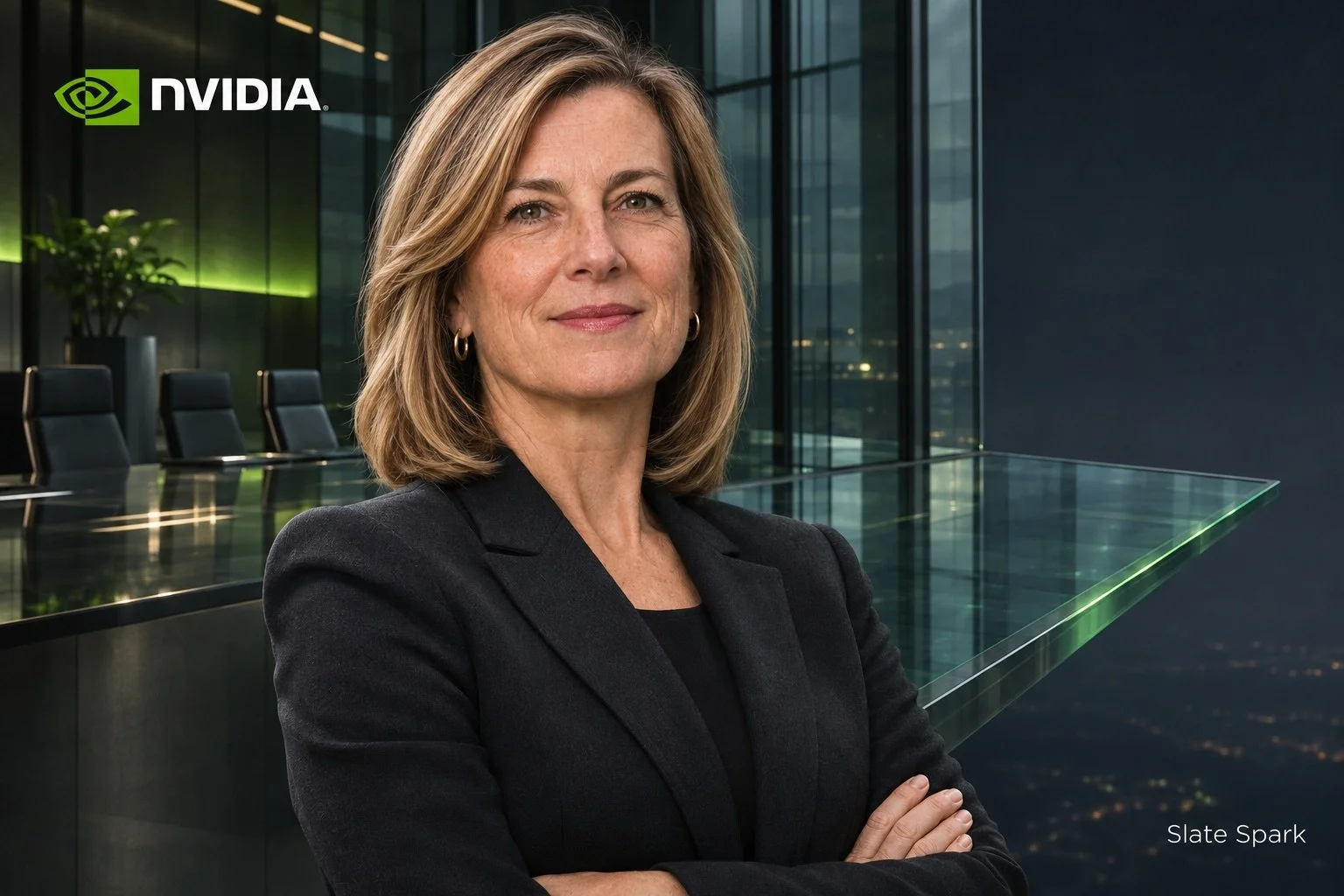
Now she has to run the company, clean up the mess, and, if she wants the permanent job, make sure the board seriously considers her for it. Let’s face it, that last part takes some elegant politicking. And politicking takes time.
Ah, we women are so good at balancing time. We know what has to happen now and what can wait. I’d put getting a date with the search committee on the calendar now.
I’m glad she said yes. I often advise women to take the hard jobs. There are obvious risks, but what an opportunity to show your capabilities. The worst that can happen is you have a chance to shine, and if it doesn’t work out, not only do you learn something but you’re more likely to be sought out for other opportunities elsewhere.
For one thing, a board that needs an answer by dinner may agree to terms it would have spent six months explaining were impossible. Kress can ask for the authority to change the leadership team, a say in what the board tells the public, and a date when the directors will consider you for the permanent job. They asked you to take this on. You can ask them for what you want and need to make your success possible.
For another, a crisis brings into your office people who have spent years being told their ideas were impractical. Some of those people know exactly where the company is wasting money, which executive everybody works around, and which product the customers would buy tomorrow if somebody would let them build it. I’d give those people the first appointments on my calendar. They are not always right. I’d listen closely then use my judgment and own it.
And then there’s the pleasure of getting to make the decision you’ve been right about for six years. I’m partial to that one. Every woman who has ever walked out of a meeting thinking, If they’d give me twenty minutes and the authority to do it, knows what I mean.
It’s a strength we have built into a superpower from necessity: we’re less ego driven than men and more inclined to focus on simply getting the work done.
If I were Kress, I’d set aside a little time every week for something Nvidia ought to do even if Jensen Huang had left on the most perfectly good Thursday of his life. Adding complexity to Kress’s challenges, a move is afoot mostly by his wealthy tech bros, to reinstate Huang. We’ll see what comes of that.
But meanwhile, the board will have a chance to see what she’d build and how she handles crises like this. So when they interview the other candidates, she can make them explain what they’d do better than the woman already doing the job.
Better to be the person who might appear less powerful, but who uses her “power to”* so strategically that if she wants it, she’ll win the round.
(Check out the 9 Leadership Power Tools Course if you want to know what I’m talking about.)
GLORIA FELDT is the Co-founder and President of Take The Lead, a motivational speaker, and a global expert in women’s leadership development and DEI for individuals and companies that want to build gender balance. She is a bestselling author of five books, most recently Intentioning: Sex, Power, Pandemics, and How Women Will Take The Lead for (Everyone’s) Good. Honored as Forbes 50 Over 50, and Former President of Planned Parenthood Federation of America, she is a frequent media commentator. Learn more at www.gloriafeldt.com and www.taketheleadwomen.com. Find her @GloriaFeldt on all social media.