
They’re In: How Elected Women in Office Change Your Life
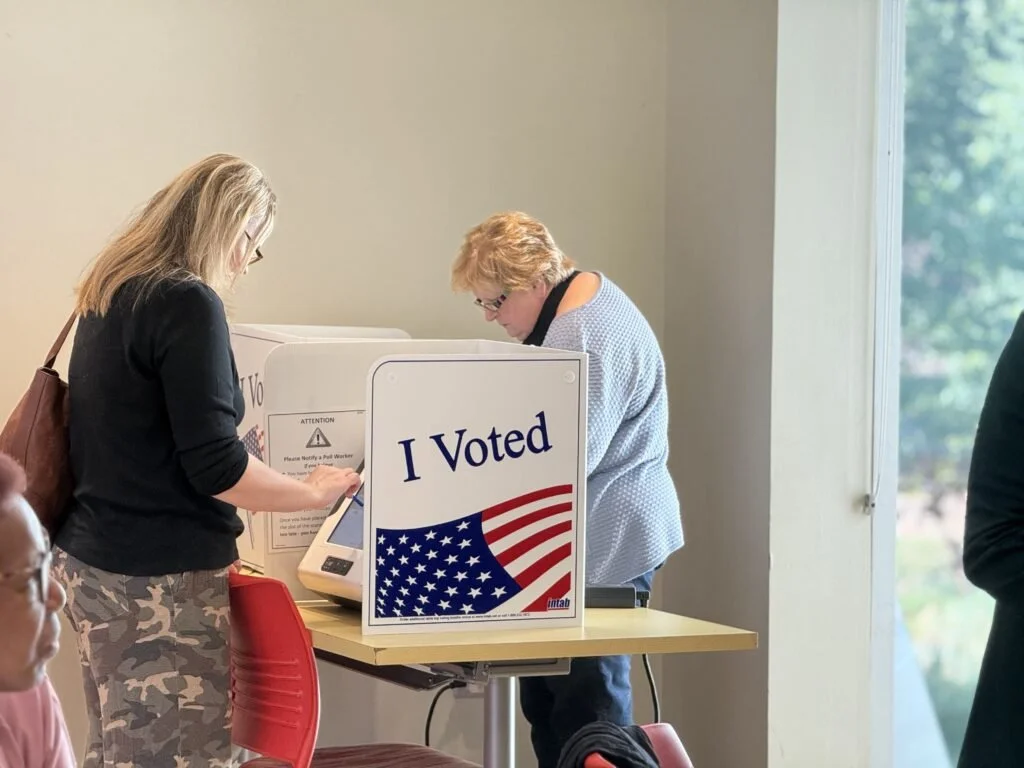
It was not called the “Year of The Woman” as it was in 2018, but it just may be deserving of the moniker, “Year of Firsts For Women.” This year more in the U.S. midterms, women ran for public office, won key seats and made historic first time ever claims in Congress and as governors.
But there are fewer women—139— in Congress after the midterms, than in 2024. Yes, there were more women elected in the House, above 2026 levels, but fewer women elected in the Senate, below 2026 levels.
“2026 is Year of Firsts For Women as more women ran for public office, won key seats and made historic first time ever claims in Congress and as governors. #midterms #women”
Keisha Lance Bottoms, a Democrat is the first Black governor of Georgia and in the U.S.. Gina Hinojosa, a Democrat, is the first Latina governor of Texas. Juliana Stratton won a Democratic Senate seat in Illinois and is one three Black women who will serve concurrently in the U.S. Senate. When the final votes are in from Alaska, many expect Mary Peltola to win the Democratic Senate seat to become the first female Native American in the Senate in the state. In the U.S. Virgin Islands, Stacey Plaskett became the first Black female governor of any U.S. territory. There are now 17 female governors.
There is a great deal of celebration in communities, cities, counties and states across the country for the vibrant role women on both sides of the aisle played in these elections.
More great news for Native American women is that “Deb Haaland, D-New Mexico, will be the country's first Native American woman governor, and Lt. Gov. Peggy Flanagan, D-Minnesota, will be the country's first Native American woman U.S. senator,” USA Today reports. Maura Healey becomes the first lesbian governor of Massachusetts.
“@KeishaLanceBottoms is 1st Black governor of Georgia, and @GinaHinojosa, is 1st Latina governor of Texas.”
Dr. Amy Acton (D-Ohio) won her gubernatorial race, following unconscionable personal attack ads leading up to the midterms. Three Republican women are slated to win the governor’s role: Sarah Huckabee Sanders in Arkansas; Kelly Ayotte in New Hampshire and Marsha Blackburn in Tennessee.
Yes, the victories were many, as 139 women, or 26% of seats, will be serving in Congress next year. But it is down from 152 women, or 29% in 2024.
“139 women, or 26% of seats, will be serving in #Congress next year. It is down from 152 women, or 29% in 2024. #womeninoffice”
Considering the local, national, global and historic context of this political moment, what does that mean for you and for gender equity in leadership across all business sectors? Does the symbolism of representation filter down to the workplace? It appears the same conundrums of financial backing and difficult levels of bias and presumptions also surround women at work, but the news of the day is, women can beat the odds. And they did.
Read more in Take The Lead on leading during election season
The bottom line is more women ran than ever, more women voted, more women donated—but with fewer dollars.
Also more women were criticized for assuming they would only concentrate on “women’s issues” of healthcare, education, childcare, elder care, reproductive rights, domestic violence, sexual harassment and affordability. And they would be considered less competent on issues of the economy, labor, data centers, climate change and crime, according to research from 2022.
“Women criticized for assuming they would only concentrate on #womensissues of #healthcare, #education, #childcare, #eldercare, #reproductive rights, #domesticviolence, #sexualharassment and affordability.”
Read more in Take The Lead on women in politics
Additionally, this research shows, “Voters often use gender stereotypes to evaluate candidates, which should help women in some electoral contexts and hurt them in others. Yet, most research examines a single context at a time—usually U.S. national elections, where partisanship is strong—and employs surveys and experiments, raising concerns that citizens’ responses may not reflect how they actually vote.”
Read more in Take The Lead on women voting
While the results were not unanimous for women—with many key races showing women candidates defeated-- the numbers of women running were record-setting.
US Polling Data reports, “In 2026, more than 200 women were competing for House seats and 12 for Senate. Women hold 28.7% of House seats — a record — and the 2026 cycle could push that past 30% for the first time.”
It did not.
Read more from Gloria Feldt on women voting
Forbes reports, “According to Rutgers University’s Center for American Women and Politics, 26 women are nominees for governor—a record—and 19 are nominees for the U.S. Senate. Another 271 women have secured House nominations. But running, winning, and building lasting political power are different measures of progress.
For historic context, Forbes reports, “When the new Congress convened in January 1993, six women held Senate seats. Ninety-four seats were still held by men. The number of women had tripled, yet women remained just 6% of the chamber.”
Financial backing is a factor in the gender disparity of political posts, “Further research by Rutgers researchers found that women represented approximately 56% of unique congressional campaign donors in their September analysis, but supplied only 41% of the dollars. Women were participating in greater numbers; men still provided most of the money.”
“Research @RutgersU: Women are56% of unique congressional campaign donors, but supplied only 41% of the dollars.”
Read more in Take The Lead on women running for office
Local News Live reported more women of color voted. Additionally, “The gender gap is different between the two parties. Women make up 42% of congressional Democrats, which brings the party closer to parity. However, women make up only 15% of congressional Republicans.”
“Women make up 42% of congressional #Democrats, Women make up only 15% of congressional #Republicans.”
Women vote more than men do, and a recent New York Times poll shows, “56 percent of women saying they prefer Democratic candidates, compared with 37 percent who say they prefer Republican ones.”
But does having more women in office actually improve outcomes for the women who elected them? Recent 2024 research on global political outcomes of women leaders in office has mixed results.
Read more in Take The Lead on women voters
“The participation of women in political processes improves the outcomes (for women) both by their focus on pressing social issues and through their ability to work across political divides, even in politically charged situations.” However, UN Women reports in 2023 data, “only 34 women served at the national government level in 31 countries: in 17 countries as heads of state, and in 19 countries as heads of government.”
The Women’s Economic Forum Global Gender Gap Report from 2022 shows it will take 132 years to close the representation gender gap. To combat this slow climb to equity, some countries have installed “legislative and voluntary electoral gender quotas to ensure gender balance. Gender quotas have been introduced in 85 countries: 66 have introduced candidate quotas, and 19 countries have reserved seats.”
The U.S. has no gender quotas for any elected position.
“@WEF: “To ensure #genderbalance, #genderquotas have been introduced in 85 countries: 66 have introduced candidate quotas, and 19 countries have reserved seats.””
How does that matter to you in the workplace and as a leader?
The Handbook of Research on Gender and Leadership reports, “There is a correlation between women’s leadership parity in the economy and women’s representation in government leadership. Though women’s leadership representation at the highest level seems to be increasing at a glacial pace, such changes can begin to snowball, the pipeline can continue to grow, and women’s voices and influence can become stronger forces within the global corporate environment.”
“Though #womensleadership representation at the highest level is increasing at a glacial pace, such changes can begin to snowball, the #pipeline can continue to grow, and #womensvoices and influence can become stronger forces within the global corporate environment.””
Read more in Take The Lead on voting as leadership
Additionally, “Advocates for women’s advancement assert that companies need to change the ways they define leadership; recruit, hire, and promote women more effectively; support stronger work–life integration policies and practices, including flexible work time and better childcare options; strengthen paternal leave policies; design women-only leadership development programs and initiatives; and implement other innovative solutions. Specific, targeted efforts will be necessary to advance women toward equality in senior management.”
Nature reports that more women in leadership in the economy translates to more women in policy making positions, and vice versa.
“We argue for the necessity of organizations to initiate a cultural transformation that fosters positive experiences for future generations of female leaders, recommending a shift in focus from improving outcomes for specific groups to creating an inclusive leadership culture.”
