
Be the Light: Disrupt the Darkness
Issue 2870— December 22, 2025
I’m struggling to write this week.
During the season of jingling joy, when people are celebrating holidays—Hanukkah, Christmas, Kwanzaa, and recently Diwali—that feature light as a metaphor for the positive, violence and bad news are coming at us rapid fire. It feels close. Personal. Heavy.
If you’re feeling like me, I’m not here to tell you everything will be okay. I don’t know that it will.
What I do know is this: darkness doesn’t end itself. Someone has to disrupt it.
Last week, at Bondi Beach in Australia, a 14-year-old girl named Chaya Dadon shielded younger children with her body during the massacre that killed 15 Jews celebrating Hanukkah. Later, in a speech to 15,000 gathered to memorialize those who had lost their lives, this teenager with braces and Marian the Librarian glasses sliding down her nose, said she understood her purpose in that moment—to be the light in a field of darkness.
And she challenged the rest of us to do the same.
That wasn’t sentiment. That was clarity.
Being the light isn’t about power over anyone. It’s power to refuse to accept what diminishes our humanity.
Light isn’t power over darkness. It’s the power TO disrupt it.
The phrase “be the light” gets tossed around easily in moments like this, often by people who don’t want to grapple with the violence or injustice of the moment. It can sound like a shortcut, a bypass, a way of saying, “Please don’t make this uncomfortable.”
So let me be clear.
Being the light isn’t just a feeling.
It’s not using optimism as denial.
It’s not pretending what is broken isn’t broken.
Being the light is a choice you make after you see clearly. And clarity, right now, can be brutal.
Chaya Dadon did something no child should ever have to do. Yet she spoke forcefully, not about courage or fearlessness.
She spoke about purpose.
If a child can recognize her responsibility in the worst of moments, what does that ask of the rest of us?
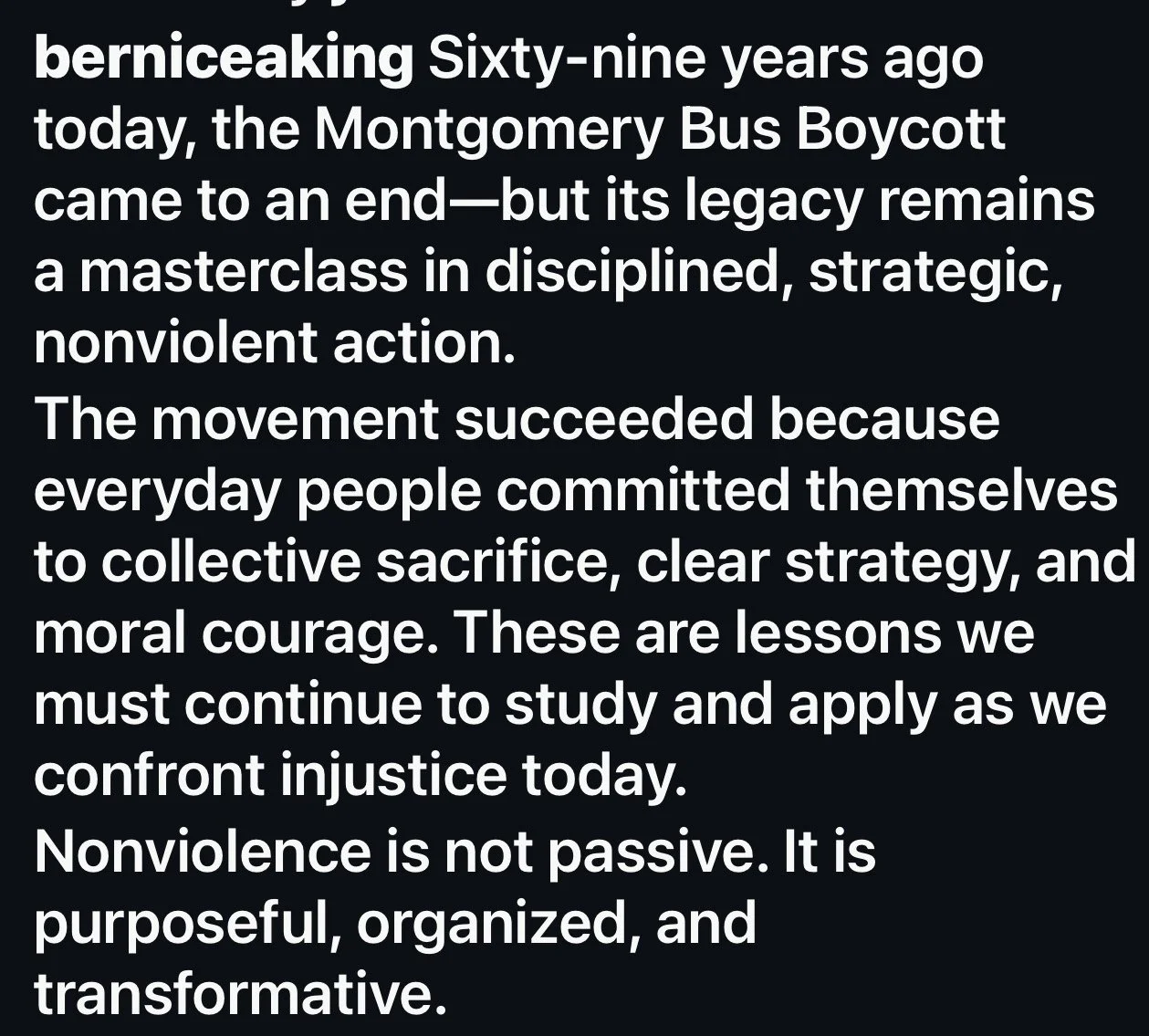
History tells us that light does not always arrive soon or suddenly. Sometimes it’s slow, deliberate, hard-won.
Nelson Mandela spent 27 years in prison and emerged without vengeance—not because anger wasn’t justified, but because he understood something essential: becoming what you oppose is one of darkness’s most reliable victories. His light wasn’t a single act. It was a discipline practiced daily, usually without applause. But it disrupted a system designed to keep him and other Black South Africans powerless.
Eleanor Roosevelt endured ridicule, dismissal, and threats, yet she kept writing, convening, insisting. When the world was still bleeding from war, she helped give language to human rights—not because the moment was hopeful, but because it was fragile. Light, in her hands, looked like persistence and optimism, the belief in one’s purpose.
Mandela, Dadon, and Roosevelt all used their light to disrupt the darkness of injustice.
Their optimism about the power of being the light is courageous, but it’s also entirely rational. Because whether they articulated it or not, they must have known the inevitable backlash is never accidental.
Rights are not attacked unless they matter. Progress is not reversed unless it has moved the needle. Authoritarianism does not fear apathy; it fears imagination. Hatred of a group of people simply because of who they are is the world’s oldest tribal technique of mobilizing the troops to take unearned power over others.
So what does it mean—for us, now—to be the light?
It means telling the truth out loud, even when your voice shakes.
It means choosing one place to act instead of a thousand places to worry.
It means practicing generative power—building, protecting, mentoring, funding, convening, donating—rather than dominating or despairing.
It means staying human on purpose: resting without guilt, laughing when you can, refusing to let joy be framed as betrayal.
You don’t have to be extraordinary. You do have to be intentional.
A light in the darkness disrupts it so that it’s not darkness any more.
That’s why Take The Lead’s mission, my personal mission, for women to take their fair and equal share of leadership positions brings light on a personal and societal level. It’s a big mission, and I don’t have to tell you there’s a lot of backlash against women’s advances right now. Because of the massive displacement of women due to government job and funding cuts, we’re committed to providing scholarships to our 9 Leadership Power Tools course to help them pivot. Here’s how you can help with that and be another woman’s light.
Fortunately, you don’t have to be the sun to be the light. Sometimes you’re a candle. Sometimes you’re a match. Sometimes you’re the one who refuses to blow the light out.
This is not an easy time. But what young Chaya Dadon understands—what Mandela and Roosevelt understood—is that darkness does not retreat on its own. Everyone has to decide who they will be when the moment arrives.
And whether we asked for it or not, disrupting the darkness is what this leadership moment asks of us.
Light isn’t power over darkness. It’s power to disrupt it, and turn the moment into a courageous and purposeful act that changes the playing field.
It’s why your voice matters so much right now.
Go be the light.
GLORIA FELDT is the Co-founder and President of Take The Lead, a motivational speaker, and a global expert in women’s leadership development and DEI for individuals and companies that want to build gender balance. She is a bestselling author of five books, most recently Intentioning: Sex, Power, Pandemics, and How Women Will Take The Lead for (Everyone’s) Good. Honored as Forbes 50 Over 50, and Former President of Planned Parenthood Federation of America, she is a frequent media commentator. Learn more at www.gloriafeldt.com and www.taketheleadwomen.com. Find her @GloriaFeldt on all social media.