
I Call BS: No, McKinsey et.al, Women Don’t Lack Ambition

Issue 2869— December 16, 2025
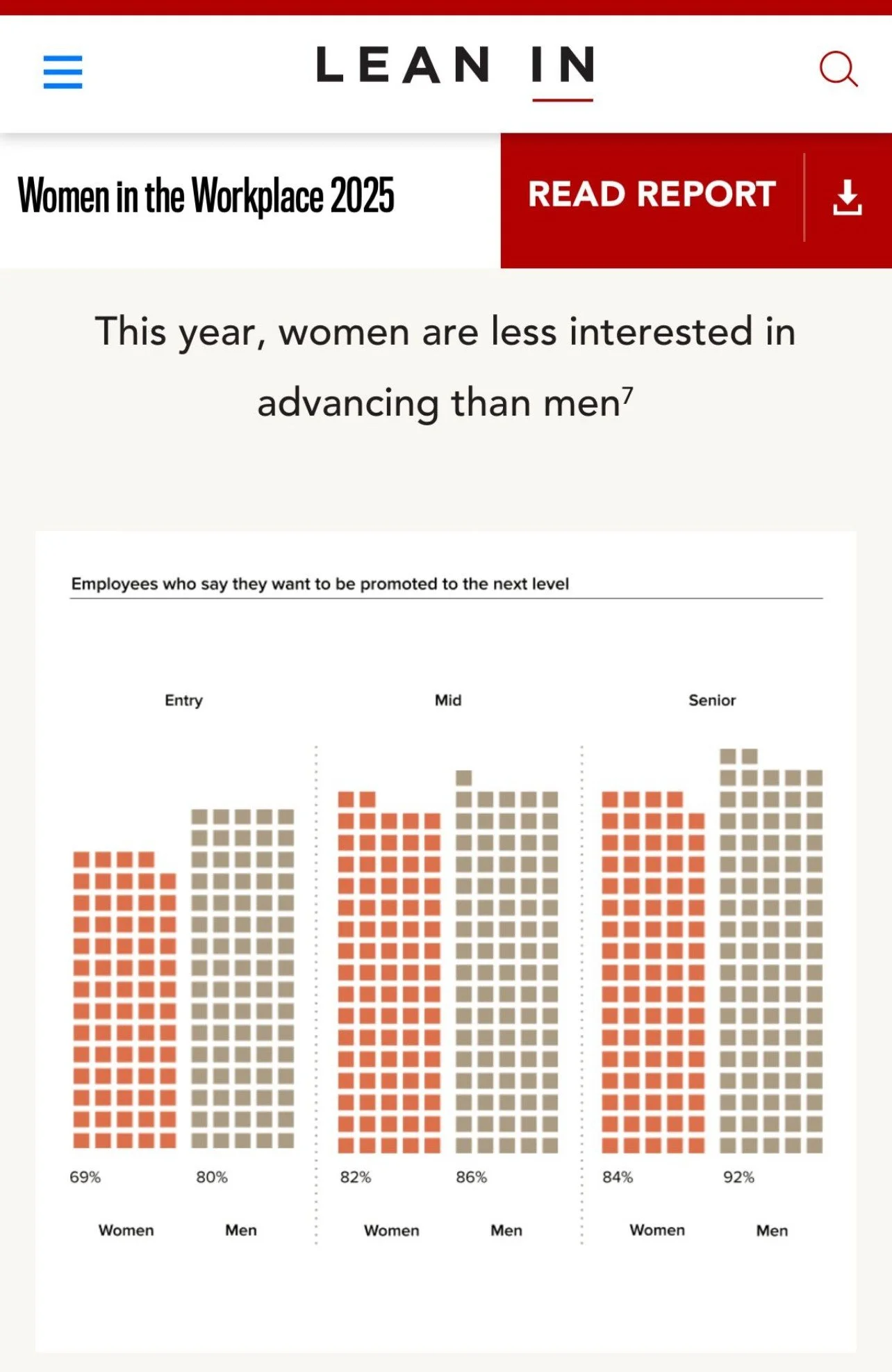
Steam is coming out of my ears as I read the latest “Women in the Workplace” 2025 report from McKinsey and LeanIn.org.
The study mostly affirms the pervasive and systemic biases that are designed, whether intentional or not, to keep women in their place.
Yet it concludes the problem causing stagnation of women’s trajectory into leadership positions in companies is that while there are still systemic barriers, the main reason is that women have an “ambition gap.”
Do you believe that?
Let’s look at three reasons why the researchers might have come to this conclusion and why they are dead wrong.
First of all, when society or your workplace keeps telling you that you are better off not in leadership roles, you might start to believe it.
This is not as transparent as in previous generations, when people might have said women should remain barefoot and pregnant in the kitchen. We’re fortunately beyond that today, though the current elevation of the tradwife to an aspirational ideal hearkens back to those Ozzie and Harriet days. I can tell you from experience they weren’t nearly as satisfying as they’re cracked up to be by sentimentalists—or men who want to retain power over their wives and workplaces.
The result? It can be exhausting. It can make us step back, when we live in a world where women’s voices are heard if at all as less authoritative. This makes us less listened to in business meetings. It makes what we say less heeded.
Plus, the remaining biases that favor male resumes over female are exacerbated by being ingrained in AI.
Second, there’s the reality of caregiving.
When neither your workplace nor public policy provides affordable childcare in a culture that still places over 60% of unpaid caregiving on women’s shoulders, it’s not surprising that there will be times in a woman’s career that she might decide it makes more sense to detour from the leadership path for a few years to give her children the attention she believes they need. And our system discounts people who detour from the straight path to leadership.
Editor-in-chief of “The Care Gap,” Blessing Oyeleye Adesiyan, zeroed right in to call out the fact that lack of caregiving support wasn’t even mentioned as barrier to women’s advancement in her LinkedIn post about the study.
In this interview, Clare Bresnahan English says it’s not an ambition gap, it’s a support gap. That’s surely true, and then she really gets to the heart of the most damaging consequences:
“If we don’t get this right now, particularly as AI is transforming the workplace, we will see this gap grow and grow and there will be a real deficit in leadership capacities and pipelines. You’ll see that women won’t be shaping and building AI which is the future of our economy and the future of our workforce.”
Let’s face it: support includes the systemic changes needed, and the only way we will get those changes at scale is to have more women in leadership setting policy and ensuring that AI works for everyone rather than merely incorporating our existing cultural biases— including the obvious and egregious bias in this study that concluded women have less ambition than men.
In fact, with all the barriers and hurdles women have to navigate in the workplace, the amazing thing is that 80% of us remain overtly ambitious. It just shows you how resolute women are that their ambition hasn’t been completely leached out of them. Lesser beings would have thrown in the towel long ago.
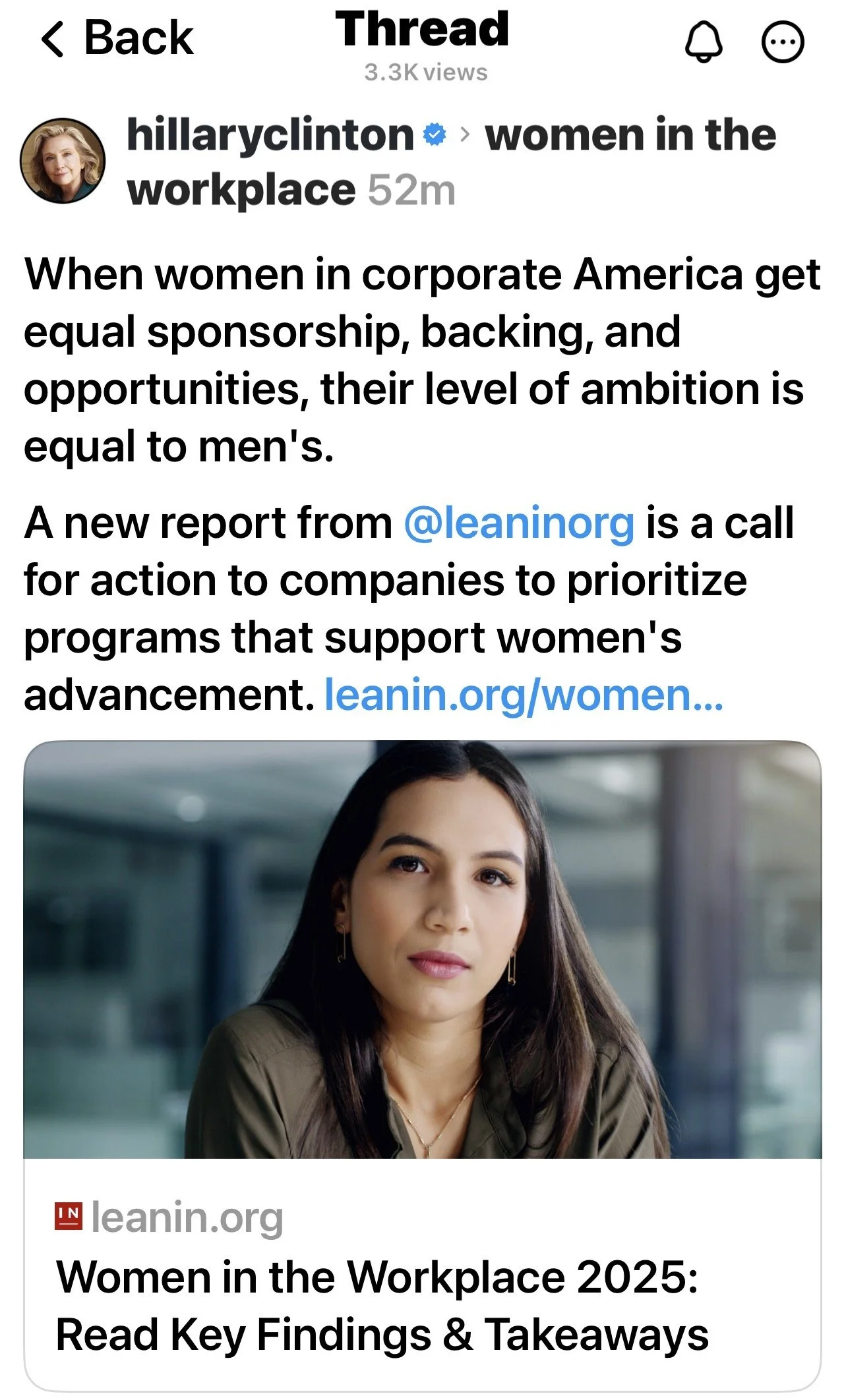
Which brings me to the third overlooked point: the explosion of women into entrepreneurship makes it clear that many women opt out of corporate leadership trajectories not from lack of ambition but to have the flexibility and autonomy not afforded by companies.
These women are very ambitious—to create their best lives and they aren’t finding that in the corporate structure or culture.
To give you an idea of how old the “women lack ambition” trope is, McKinsey didn’t even invent the term “ambition gap.”
It was in use over a decade ago when I was researching women and leadership for my book No Excuses: 9 Ways Women Can Change How We Think About Power. Then Brown University professor Jennifer Lawless used it in her 2005 book, It Takes a Candidate: Why Women Don’t Run for Office.
Most of the prominent research then and since has interpreted women’s lack of attaining senior leadership as being rooted in lower levels of ambition than men.
But when I said this to women then and now, they look at me like I have two heads. Viscerally, we all know that isn’t true.
There isn’t an inherent ambition gap; it’s all social conditioning, whether individuals or organizations.
So what to do about it?
There is a lot employers can and should do to fix this. But that isn’t likely to happen until women share equally in leadership power and leadership roles.
So I dug further and developed my theory that women are socialized to have an ambivalent relationship with power and intention, which is fueled by ambition.
Yet I also realized that until women have equal leadership positions, aka power, to set organizational policies, we will never be able to make the structural changes that will make work life better for both women and men.
The solutions seem so simple but it’s hard to change a culture while you’re living in it. That is true even though the data is clear that companies with more women in leadership are more profitable; therefore logically, they should be doing whatever they can to recruit, develop, retain, and promote their female employees.
If facts alone persuaded corporate leaders, we would have reached leadership parity and made the needed systemic changes long ago.
So, to thrive in the world as it is while changing it, women need the mindset shift about power that I observed is the linchpin. It’s why I created Take The Lead’s proven effective leadership development program, based on my 9 Leadership Power Tools first outlined in the book, No Excuses.
It’s time for a big breakthrough to give women the tools for a successful leadership journey, including how to bring about the necessary changes to structures and biases that have been holding us back.
That’s why I’m calling BS on the report, and calling on you to help lead the change. Are you on board? Drop a comment if you say yes.
And stay ambitious.
GLORIA FELDT is the Co-founder and President of Take The Lead, a motivational speaker, and a global expert in women’s leadership development and DEI for individuals and companies that want to build gender balance. She is a bestselling author of five books, most recently Intentioning: Sex, Power, Pandemics, and How Women Will Take The Lead for (Everyone’s) Good. Honored as Forbes 50 Over 50, and Former President of Planned Parenthood Federation of America, she is a frequent media commentator. Learn more at www.gloriafeldt.com and www.taketheleadwomen.com. Find her @GloriaFeldt on all social media.