
The World Because of Gloria Steinem: What Will We Make Of It Now?
Issue 2897 -September 8, 2026
“This is what 50 looks like,” Gloria Steinem said to raucous cheers from the several hundred mostly women gathered at a luncheon event in Phoenix 42 years ago.
That was the first time I saw the woman who, for many, symbolized American feminism for over six decades. Her death at age 92 has filled social media feeds with outpourings of gratitude along with photos of people with her sharing how she touched their lives.
Her joy in being exactly who she was captured me that day.
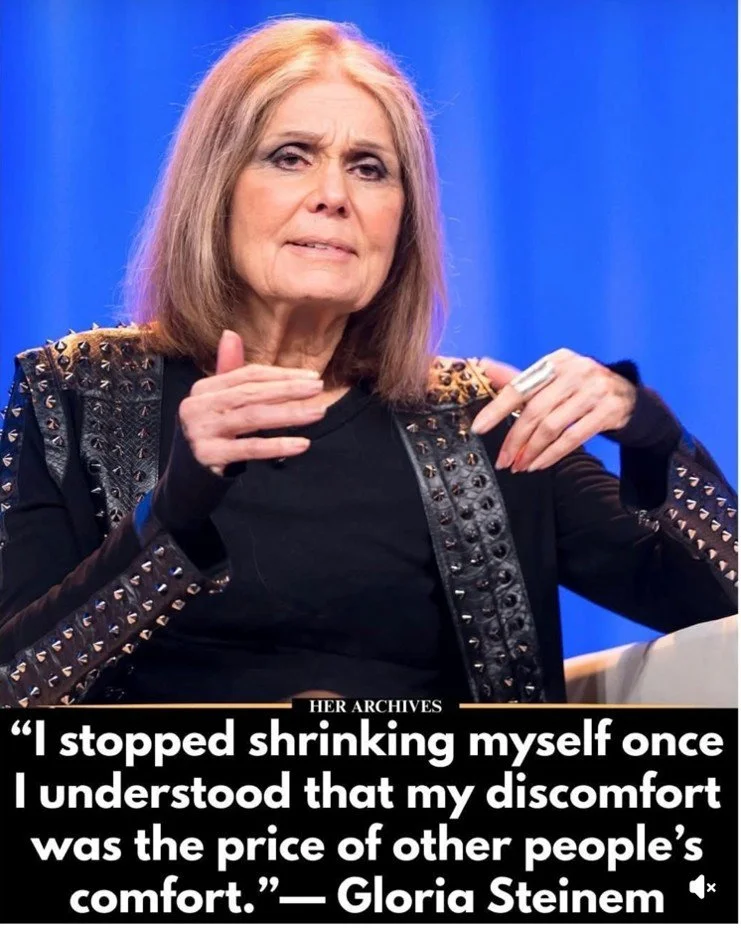
I had already credited Ms. Magazine, one of many feminist organizations that Steinem was in the forefront of starting, with changing my life. Along with the birth control pill, Ms. was the most instrumental in letting me know I could construct a life of my own, a life beyond the culturally prescribed roles of wife and mother, or choose those roles If I wanted.
I was 42 at the time of that luncheon, with a career that allowed me to make my life’s passion of equal rights for women into my life’s work and a husband who didn’t just support me but participated in many of my activities. Still, I was concerned about what other people thought of me, how I looked and acted. And I was certainly aware that society, especially the male dominated part, which was to say most of it, looked at women over 40, and for sure those over 50, as having exceeded their shelf life.
So Gloria’s exuberant embrace of her age and her unapologetic articulation of her feminist values were a powerful affirmation.
A self-described “hopeaholic,” a boundary breaker, woman who could see over the patriarchal horizon to a gender equal society, a woman of gentle demeanor and tempered steel strength, who could laugh at those who denigrated feminists and our aspirations for the simple justice of legal and social equality. She was a journalist who stepped into the leadership of an activist movement whose time had come.
A movement that would bring such changes as a woman’s right to have a credit card, secure a loan in her own name, the right to sexual freedom without sexual abuse, the right to decide how many children, if any, one would have, when, and with whom. It was a yeasty time of turbocharged social and legal transformation.
She was far from alone in these achievements, as she acknowledged regularly. The strength and longevity of her relationships with the likes of the late New York Congresswoman Bella Abzug, who was her political mentor and like a surrogate mother, her frequent traveling and speaking partner Dorothy Pitman Hughes, and the various editors of Ms. Magazine such as Robin Morgan, whose death just days after Gloria’s marked the end of a formative era in the feminist movement.
Always aware of the connection between racism and sexism, she made a point of appearing with Black and Indigenous women on leadership stages.
The changes wrought by second wave feminism enabled me to develop my talents and build a small Planned Parenthood affiliate into a medium sized one, a medium sized affiliate into one of the largest in the county, and spend the last nine years of that work as the national president where I led the entire organization to create a new 25-year vision and jump start a rebirth of growth with its own agenda, not merely reacting to the growing attacks of adversaries.
During that time, I began to get acquainted with Gloria Steinem the individual. Always gracious and willing to use her celebrity status on behalf of the causes she believed in, she never stood on ceremony. She flew coach when asked to cross the country to speak, demonstrate, or fundraise, usually carrying one small duffel bag with a jacket that could be thrown over her black pants and top if needed to uptick her attire for an event.
I will never forget going door to door canvassing voters with her in 2004. The look on the faces of women or men when they opened their doors and saw Gloria was priceless.
Not one to allow other people’s hands to go idle, about five minutes after I left Planned Parenthood In 2005, she called and invited me to a meeting in a basement somewhere in midtown Manhattan—I can’t remember where, but when Gloria Steinem asks you to come to a meeting, you tend to go.
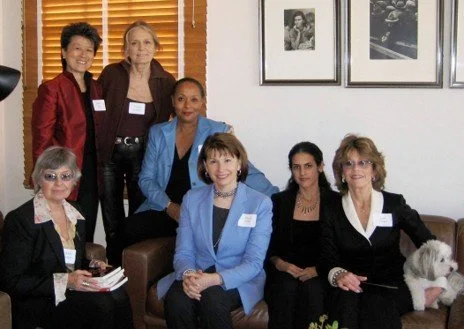
Carol Jenkins, Pat Mitchell, Jane Fonda, Robin Morgan, and a half dozen other women in media and entertainment were there. Stunned by the reelection of George W. Bush, it was one of those “We must do something” moments for women who had been working for women’s equality for decades and feared (correctly) that many of the advances women had made were threatened.
Soon the Women’s Media Center was born, to make women visible and powerful in the media in order to have more influence over what stories are told and by whom.
There was never a time when she would wring her hands and bemoan the situation. What I loved most and related to the most was her default to action.
Action is the antidote to despair in times of challenge. Action creates innovative solutions in times of calm—not that there are many calm times in the long quest for women’s equal rights.
Of all her books, Revolution from Within moved me the most. Because it is in the mindset that all meaningful change starts.
I cofounded Take The Lead in 2013 because I knew in my gut that mindset about power and leadership is the linchpin and that until women aspire to and take (because no one is going to give them) equal leadership positions and the power of decision making that goes with it, we will keep fighting the same battles and never win them.
Gloria was one of my first interviews when we started Virtual Happy Hours long before virtual events were routine. She and Julianne Moore did a virtual fireside chat for us when we were all homebound during the pandemic. She flew to Arizona to speak at Arizona State University to deliver a lecture. And on our tenth anniversary, we sat on her couch for a discussion of “Women, Power, and Leadership” that drew over 1,000 virtual participants.

We bantered that sharing the name “Gloria” required us to distinguish each other, so we decided to add our middle names. She became “Gloria Marie” and I, “Gloria Ann.” But I know as you do who people usually mean when refer simply to “Gloria!”
I am grateful for the many lessons I learned from Gloria Steinem. Such as:
Most innovation comes from outliers, from people whose lives were not the “norm.” They can see injustices that those more privileged adopt as just the way things are.
The fact that something hasn’t happened or doesn’t exist is not a reason to believe I couldn’t happen or be created.
Do you know who you are? That is more important than knowing who she is.
Telling your story is the greatest gift you can give to others.
“We are linked, not ranked.”
People have for years worried about who would step into Gloria’s role as The Feminist Leader.
She more than anyone realized that we are the leaders we have been looking for. And so it is time for each of us to lead forward, with courage, intention, and determination.
Tell me what you are planning to do.
GLORIA FELDT is the Co-founder and President of Take The Lead, a motivational speaker, and a global expert in women’s leadership development and DEI for individuals and companies that want to build gender balance. She is a bestselling author of five books, most recently Intentioning: Sex, Power, Pandemics, and How Women Will Take The Lead for (Everyone’s) Good. Honored as Forbes 50 Over 50, and Former President of Planned Parenthood Federation of America, she is a frequent media commentator. Learn more at www.gloriafeldt.com and www.taketheleadwomen.com. Find her @GloriaFeldt on all social media.